
Polycarbonate Parking Shed Roofing: A Buyer's Guide to Specs, Pricing, and Sizing in India
What actually drives the price and performance of a polycarbonate car parking shed — panel thickness, fixing system, span design, and the quote-comparison mistakes that cost buyers later.
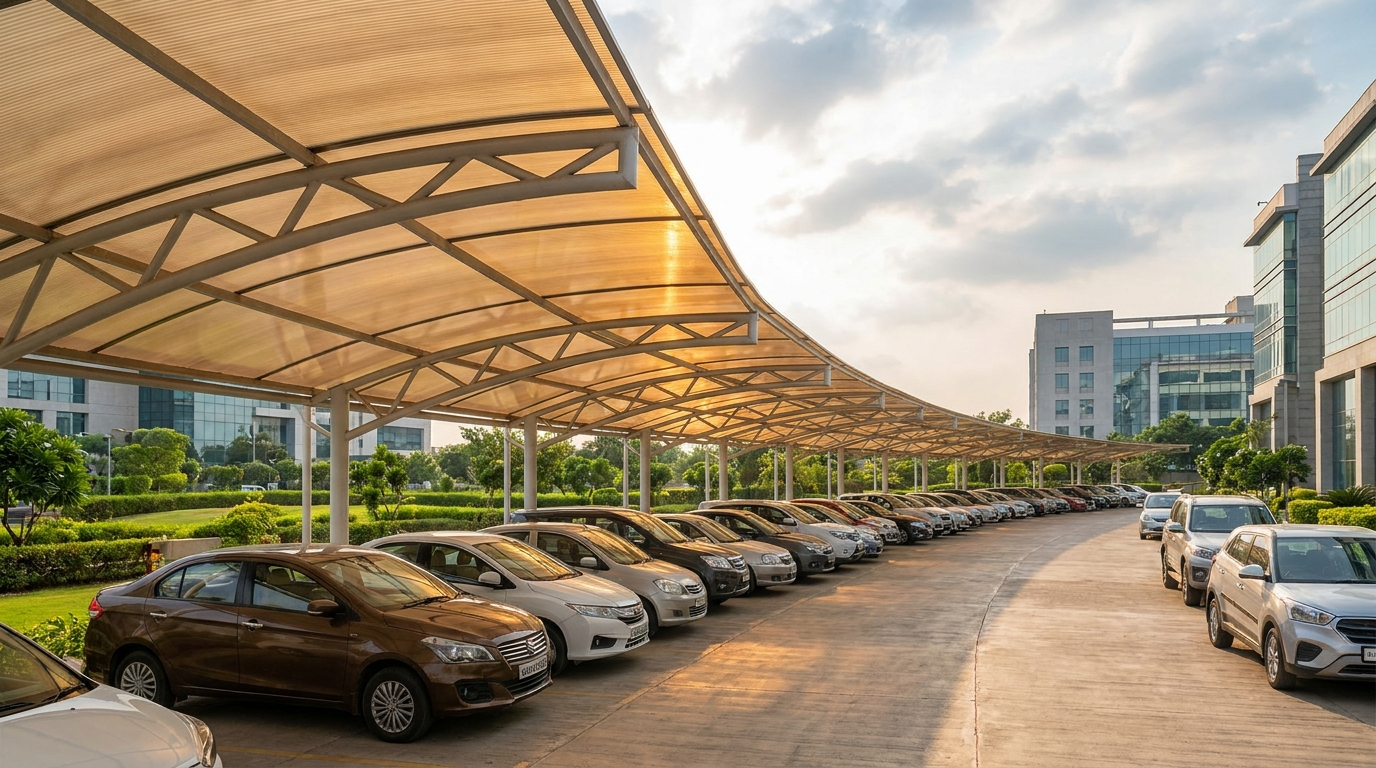
Walk into any corporate campus, hospital, mall, or gated residential complex built in the last decade and you'll likely find a polycarbonate parking shed overhead. It's become the default choice for vehicle shading in India — and for good reason: it lets daylight through so the parking area doesn't feel like a cave, it's far lighter than a metal roof (so the supporting structure costs less), and it doesn't rust.
But "polycarbonate parking shed" covers an enormous range of quality and price. We regularly see facility managers and developers comparing quotes that differ by 2x per square foot with no idea why. This guide breaks down what actually drives that price difference, and what to check before you sign a PO.
Why Polycarbonate Beats Metal Sheet or FRP for Parking Shades
Three materials dominate this category: galvanised metal sheet, FRP (fibre-reinforced plastic), and polycarbonate. We've covered the detailed comparisons in our polycarbonate vs metal roofing guide and our polycarbonate vs FRP comparison, but the parking-specific case comes down to three factors:
- Daylight: A metal roof turns a parking area into a dim, closed space that needs artificial lighting even at midday. Polycarbonate keeps it naturally lit.
- Weight: Polycarbonate roofing typically weighs 1.5–4.5 kg/m² versus 4–8 kg/m² for steel sheet — a meaningfully lighter secondary structure in most cases, which means smaller purlins, lighter columns, and reduced footing loads, often offsetting the higher per-sheet material cost.
- Corrosion: Parking areas near coastal cities or with high runoff exposure see metal roofs rust and stain vehicles within a few years. Polycarbonate doesn't corrode.
What Actually Drives the Price Per Square Foot
Quoted rates for polycarbonate parking sheds in India commonly range from roughly ₹180 to ₹400+ per square foot installed. That's a wide band, and it isn't random — it maps directly to five variables:
| Variable | Impact on price |
|---|---|
| Panel thickness | Thicker multiwall/standing-seam panels (10–16mm) cost more than thin twinwall sheet but span further and resist hail and wind load better |
| UV protection grade | Genuine co-extruded UV layers add cost but are the difference between a 10-15 year system and one that yellows in 3 |
| Fixing/jointing system | Standing seam with aluminium cleats costs more than face-fixed sheet but eliminates leak points at every joint |
| Structural steel design | Column-free spans and wind-uplift-rated structures cost more than a basic pole-and-purlin frame |
| Panel colour / tint | Bronze, opal, and specialty tints typically carry a premium over clear sheet — see our colour selection guide for how tint affects heat and glare |
The lowest quote in a comparison set is very often the lowest on one or more of these variables — usually panel thickness or UV grade, because both are invisible until the roof has been in service for a year or two. We wrote a dedicated piece on this exact trap: the cheapest polycarbonate is often the most expensive on site.
Sizing the Structure: Span, Bay Width, and Wind Uplift
Parking sheds are almost always column-grid structures, and the column spacing (bay width) is set by the vehicle layout, not the roofing material. But the roofing material determines how far the roof can span between purlins without sagging or oil-canning.
For standing seam polycarbonate systems, 900mm panel width is the industry-tested standard for a reason — narrower panels flex less under wind load and hold their line better over long parking bays. We explain the engineering behind this in our panel width guide. If a quote specifies wider panels "to save on joints," that's a red flag for long-term flatness and wind performance.
Open-sided parking sheds are also more exposed to wind uplift than an enclosed building roof — there's no wall structure to break wind flow underneath. Ask specifically for the tested wind uplift rating of the fixing system, not just the panel. Our hailstorm and impact resistance guide covers the related question of what happens when that same open structure takes a direct hailstorm hit — a real risk across much of north and central India.
Reading a Parking Shed Quotation the Right Way
A proper quotation for a polycarbonate parking shed should itemise, at minimum:
- Panel brand, system name, thickness, and colour
- Co-extruded UV protection thickness on both faces, in microns
- Fixing/jointing method (standing seam with cleats vs face-fixed)
- Structural steel grade, column spacing, and design wind speed rating
- Warranty terms — separately for light transmission loss, yellowing, and structural failure
If a quote is a single lump-sum "per sqft, installed" line with no breakdown, ask for the breakdown before comparing it against anyone else's number. We built a full walkthrough of this exact process in our quotation checklist, and our guide on reading a polycarbonate BOQ is useful if you're evaluating a contractor-submitted bill of quantities rather than a direct product quote.
A parking shed roof isn't a one-time purchase you forget about — it's a structure that will sit over vehicles, in full sun, for a decade or more. The cheapest quote and the best-value quote are rarely the same line item.
Warranty and Long-Term Maintenance
Because parking sheds are outdoors, uncovered by any secondary roof, and exposed to full UV load every day of the year, warranty terms matter more here than almost any other polycarbonate application. Check what's actually covered — light transmission retention, yellowing index, and structural integrity are typically separate clauses with different durations. Our warranty guide walks through exactly what to ask for in writing. Ongoing upkeep is minimal but not zero — see our cleaning and maintenance guide for the do's and don'ts that keep a warranty valid.
Coxwell supplies and installs standing seam polycarbonate parking shed systems across India, engineered for wind uplift, hail impact, and long-term UV stability. Talk to our team for a fully itemised quote for your parking shed project.
Frequently asked questions
How much does a polycarbonate parking shed cost per square foot in India?
Installed rates typically range from around ₹180 to ₹400+ per square foot, depending mainly on panel thickness, UV protection grade, the fixing system used, and the structural steel design. The lowest quotes in a comparison set are usually cutting corners on thickness or UV grade rather than labour.
Is polycarbonate better than metal sheet for a parking shed?
For most parking applications, yes — polycarbonate lets natural light through so the area doesn't need artificial lighting during the day, weighs a fraction of an equivalent metal roof (reducing structural cost), and doesn't corrode, which matters over a decade of outdoor exposure.
What panel width should a parking shed use?
900mm is the industry-tested standard for standing seam polycarbonate systems. Wider panels flex more under wind load and are more prone to visible waviness (oil canning) over long parking bay spans.
What should a parking shed quotation include?
At minimum: panel brand, thickness, and colour; co-extruded UV protection thickness on both faces; the fixing/jointing method; structural steel grade and design wind speed rating; and separate warranty terms for light transmission, yellowing, and structural failure.
Next step
Speak to a Coxwell engineer.
Our team can help you specify the right system, review your BOQ, or answer technical questions about your project.