Does Polycarbonate Roofing Survive Hailstorms? Impact Resistance Explained
How the IS 14443-97 dart drop test measures polycarbonate impact resistance, why post-UV-exposure testing matters more than a fresh-sheet certificate, and how polycarbonate compares to glass and metal in a hailstorm.
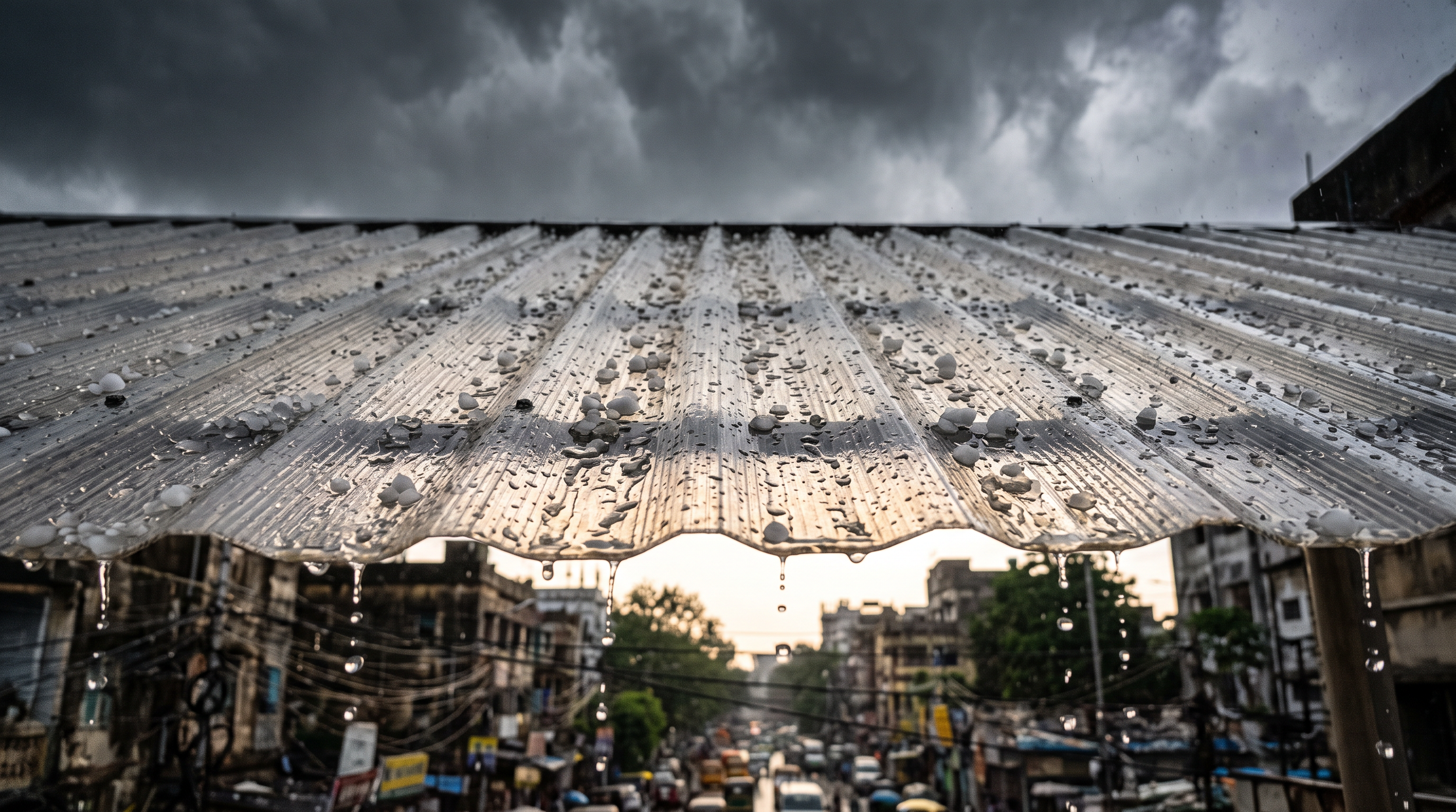
Every pre-monsoon season, North and Central India see hailstorms severe enough to crack car windshields and dent metal sheeting. If you're specifying or buying a polycarbonate roof — for a home pergola, a factory shed, or a railway canopy — "will this survive a hailstorm" is a completely reasonable question, and one that has a specific, testable answer.
This post explains how polycarbonate's impact resistance is actually tested, how it compares to glass and other roofing materials, and what determines whether a panel holds up over years of exposure — not just on day one.
Why Polycarbonate Is Used Precisely Because of Impact Resistance
Polycarbonate is, gram for gram, one of the most impact-resistant transparent materials available for construction — it's the same material family used in riot shields, safety eyewear, and machine guarding. Compared to glass of equivalent thickness, polycarbonate is roughly 200 times more impact resistant. This is precisely why it's specified for skylights and rooflights in hail-prone regions where glass would be a liability.
But "polycarbonate is impact resistant" is a material-family claim, not a product guarantee. Just like fire and UV performance, impact resistance depends on the specific formulation, thickness, and condition of the panel you're actually buying.
How Impact Resistance Is Actually Tested: The Dart Drop Test
The standard test for polycarbonate roofing impact resistance in the Indian market is IS 14443-97 (dart drop impact test). A weighted dart is dropped from a specified height onto the panel, and the panel is assessed for cracking, puncture, or shattering.
The detail that matters most — and the one most buyers never ask about — is this:
A credible dart drop certificate tests the panel after accelerated UV exposure (typically 500 hours per ASTM G-155), not just on a fresh, unweathered sheet.
This distinction is critical. Polycarbonate that hasn't been properly UV-stabilised becomes brittle over time — a panel that passes a dart drop test brand new can lose a significant share of its impact resistance after a few years of UV exposure if the co-extruded UV layer isn't adequate. A supplier who only shows you a "fresh sheet" impact certificate isn't showing you the number that matters for a roof that has to survive hailstorms five or ten years into its service life, not just on installation day.
We've covered the UV degradation mechanism in detail in our guide to UV ageing and long-term transparency — the same co-extruded UV layer that prevents yellowing is what keeps the panel impact-resistant as it ages.
What Actually Happens When Hail Hits a Polycarbonate Roof
Properly specified multiwall or multicell polycarbonate roofing — the profiles most commonly used for daylighted roofs — is built with an internal air-cell structure that absorbs and distributes impact energy across the ribbed structure, rather than concentrating it at a single point the way a flat solid sheet or glass pane would. In a hailstorm within the panel's rated impact class, this typically means:
- No shattering. Unlike glass, a correctly specified polycarbonate panel doesn't fail catastrophically into sharp fragments.
- Surface pitting is possible with very large hail (25mm+ stones), particularly on the outer skin, without compromising the structural integrity of the panel.
- Genuine puncture or cracking is rare within the tested impact class, but becomes more likely on under-specified thickness, degraded UV-layer panels, or off-brand sheet with no dart-drop certification at all.
This is very different behaviour from thin, uncertified budget polycarbonate or generic FRP sheet, which can crack or puncture under hail loads that a certified panel would absorb without damage — a pattern we've written about more broadly in why the cheapest polycarbonate sheet often becomes the most expensive one on site.
Comparing Hail Performance Across Roofing Materials
| Material | Typical hail behaviour |
|---|---|
| Glass | Shatters into sharp fragments under moderate-to-severe hail; highest risk |
| Uncertified FRP sheet | Can crack, puncture, or delaminate; performance highly inconsistent |
| Thin/budget polycarbonate | Can crack or puncture under severe hail, especially if UV-degraded |
| Certified multiwall polycarbonate | Absorbs impact via air-cell structure; surface pitting possible, structural failure rare within rated class |
| Metal sheet | Dents visibly but doesn't fail structurally; opaque, no daylighting benefit |
What to Check Before You Buy — Hail-Prone Region or Not
- Ask for the dart drop certificate specifically, and confirm it was tested post-UV-exposure — not on a fresh sheet.
- Confirm the testing lab and date. A NABL-accredited lab and a certificate less than 5–8 years old is the baseline, consistent with the standard we recommend in our architect specification checklist.
- Match thickness to your region's risk profile. Projects in known hail corridors (parts of Rajasthan, Uttar Pradesh, Bihar, and hill states during pre-monsoon storms) should specify toward the higher end of the recommended thickness range for the application, not the minimum.
- Don't rely on visual similarity. Two polycarbonate sheets can look identical at the point of sale and perform completely differently under impact if one lacks proper UV stabilisation or uses recycled/off-spec resin.
After a Severe Hailstorm: What to Inspect
If your roof has been through a significant hailstorm, a quick visual inspection is worth doing even if there's no visible leak: check for surface pitting concentration in one area (which can indicate a wind-driven storm cell), hairline cracks near fixing points, and any change in panel flatness. Isolated surface pitting on a certified panel is typically cosmetic and doesn't require action; cracking near fasteners or seams should be inspected by whoever installed the roof.
Coxwell's Multicell, Snapwall, and Prism systems are dart-drop tested to IS 14443-97 after accelerated UV exposure, not just on fresh sheet — ask us for the certificate for the specific thickness you're specifying. Talk to our technical team about the right system for your region's weather risk.
Frequently asked questions
Can hail damage a polycarbonate roof?
Properly specified, certified polycarbonate roofing is highly resistant to hail damage — it can absorb impact from hailstones that would shatter glass or crack budget sheeting. Surface pitting is possible with very large hail, but structural failure is rare within the panel's tested impact class.
How is polycarbonate impact resistance tested?
The standard test in India is IS 14443-97, the dart drop impact test, in which a weighted dart is dropped from a set height onto the panel. A credible certificate tests the panel after 500 hours of accelerated UV exposure (ASTM G-155), not just on a fresh, unweathered sheet.
Is polycarbonate more hail-resistant than glass?
Yes. Polycarbonate is roughly 200 times more impact resistant than glass of equivalent thickness, and unlike glass, it does not shatter into sharp fragments on impact — which is why it's widely specified for skylights and rooflights in hail-prone regions.
Does UV exposure affect a polycarbonate roof's hail resistance?
Yes. Polycarbonate that isn't properly UV-stabilised becomes more brittle over time, which can reduce its impact resistance well before the panel shows visible yellowing. This is why post-UV-exposure dart drop testing, not just fresh-sheet testing, is the meaningful certificate to ask for.
Next step
Speak to a Coxwell engineer.
Our team can help you specify the right system, review your BOQ, or answer technical questions about your project.