
Home/Applications/Polycarbonate Façade & Cladding Systems

Polycarbonate Façade & Cladding Systems

Click-lock translucent façades with thermal performance, colour fusion, and no wet seals.
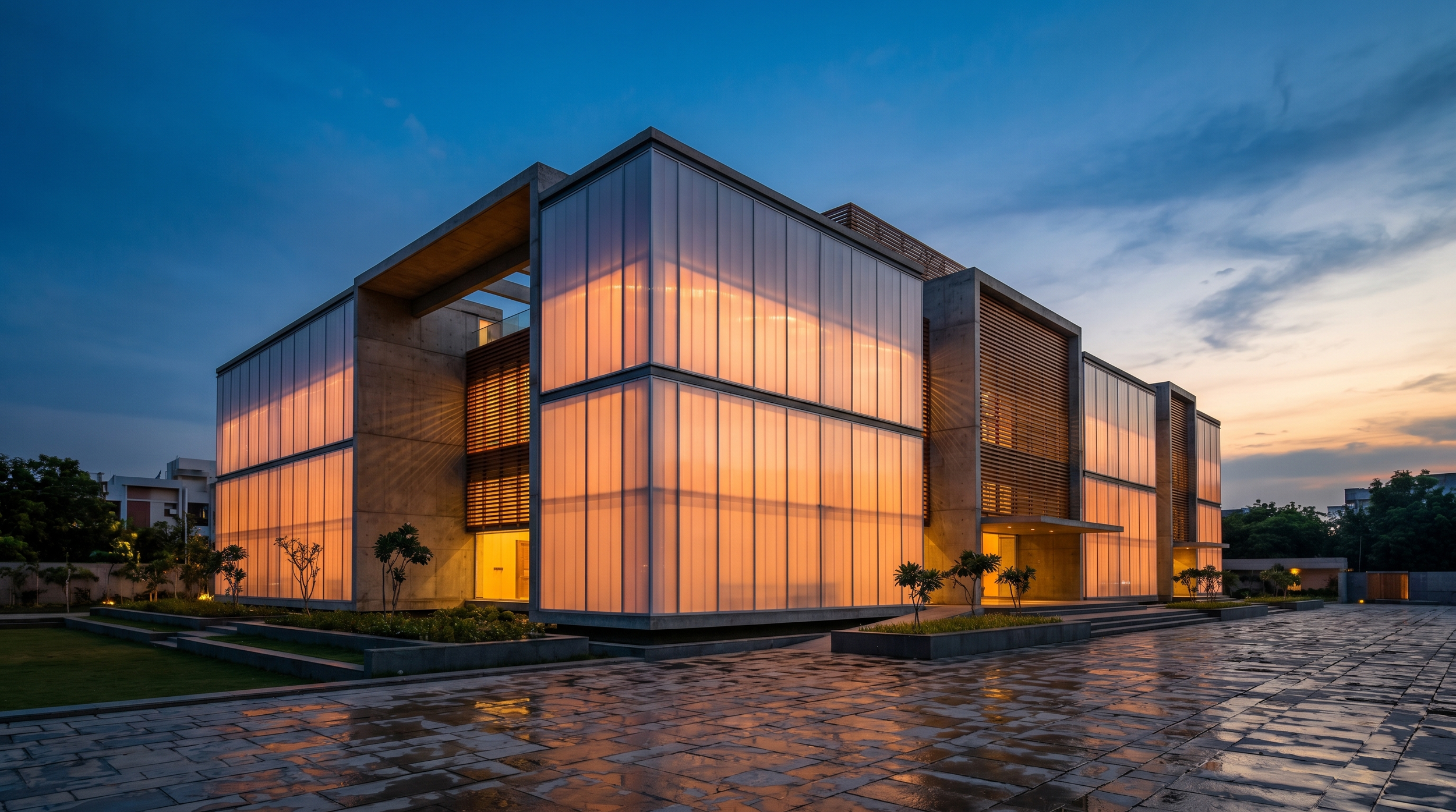
Modern civic building with translucent polycarbonate facade cladding — Coxwell Snapwall
FIG. 01 · InstalledPolycarbonate Façade & Cladding Systems
01 · Overview

A translucent polycarbonate façade is no longer a budget alternative to glass. The new generation of polycarbonate cladding systems — click-lock installed, thermally broken, colour-fused — brings together the performance of a curtain wall and the architectural expressiveness of a light-emitting building skin.

Coxwell Snapwall and Vivid are the Innovative range — engineered for architects who want a building envelope that does more than keep the rain out.

02 · Why polycarbonate

Polycarbonate vs alternatives.

FeaturePolycarbonateGlassAluminium cladding
TranslucencyYesYesNo
Weight3–5 kg/m²15–30 kg/m²4–8 kg/m²
Thermal breakYes (Snapwall U≈0.99)Only with IGULimited
Colour optionsFused into panelCoatedPowder coated
Impact resistanceHigh — does not shatterShattersDents
InstallationDry click-lockSpecialist glazing teamStandard
Energy savingUp to 25% HVAC (Vivid)Depends on specNone
MaintenanceNoneSealant every 5–7 yrsRepaint every 10 yrs
03 · Products

Recommended for this application.

Primary

Snapwall

The first polycarbonate product with a 10-wall X-structure. Click-lock vertical installation — no wet seals, no exposed fixings. At 0.99 W/m²K, it is the best thermal performer in the Coxwell range. Three-colour fusion is structural — not painted on.

Specify Snapwall
Also consider

Vivid

For façades that need to perform and communicate. Vivid's precision micro-louver matrix directs daylight where it is needed and blocks solar gain where it is not. Up to 25% HVAC and lighting energy saving. Three colours fused in a single panel — structural colour, not painted on.

Specify Vivid
04 · Specification

How to specify.

Specifying a Coxwell polycarbonate façade

SnapwallWhen thermal performance is the primary driver. Best for: air-conditioned commercial and institutional buildings. U-value ≈ 0.99 W/m²K, 40 mm depth, 500 mm panel width.
VividWhen architectural expression and energy saving are both required. Best for: civic buildings, educational institutions, signature retail. 16–30 mm, 900 mm panel width, tri-colour louver technology.
Panel orientationSnapwall is a vertical glazing system only. Vivid can be specified for both vertical cladding and sloped roof.
Colour and finishBoth systems offer dual and tri-colour fusion — specify combination at order. Colours are structural (fused during extrusion), not painted.
Snapwall 40mmU ≈ 0.99 W/m²K — best in range
Vivid 20mm+U < 2.0 W/m²K
05 · Reference projects

In the field.

VSPK International School, Delhi

800 m² · Snapwall · Architect-specified façade · 2023. Click-lock installation across the main building elevation — specified for thermal performance and visual identity.

Spectrum Mall Noida

3,500 m² · Vivid 16mm tri-colour · 2023. Tri-colour fusion façade creating a distinctive daytime and evening identity for the retail building.

View project →
06 · FAQ

Common questions.

What is the thermal performance of Coxwell polycarbonate facades?+

Snapwall achieves a U-value of approximately 0.99 W/m²K at 40 mm — comparable to many double-glazed window units. Vivid at 20 mm+ achieves U < 2.0 W/m²K. Both systems use the panel's multi-wall cellular structure as the thermal break — no additional insulation layer required.

Can polycarbonate facades be used for LEED-certified buildings?+

Yes. Coxwell products can support project-level LEED documentation through daylighting, energy-performance, and material data. Relevant documentation available on request.

How is Snapwall different from a standard polycarbonate sheet on a wall?+

Snapwall is a complete facade system — panel plus proprietary click-lock aluminium framing. The click-lock profile creates a dry, sealed joint with no sealant, no exposed fasteners, and no specialist installation tools. A standard sheet screwed to a wall requires sealant at all joints, creates thermal bridges at the fixings, and requires sealant maintenance every 5–7 years. Snapwall has minimal maintenance requirements.

What is the maximum span for a polycarbonate facade panel?+

Snapwall panels are 500 mm wide with a maximum length of 12 m between top and bottom framing. Vivid panels are 900 mm wide with a maximum length of 12 m. For larger bays, intermediate horizontal rails are specified.

Can polycarbonate facades glow at night?+

Yes, and this is one of the most distinctive features of a Coxwell Vivid or Snapwall facade. From the exterior at night, artificial interior lighting transmits through the translucent panels, creating a warm glowing surface. Several Coxwell-specified buildings have been designed with this in mind.

07 · Specify

Specify a Coxwell facade →

Share your elevation dimensions and specification requirements. Engineering response within 48 hours.

Get a facade quote →
Have a project to spec?Engineering response within 48h
Get a quote →