
Why 900mm Is the Right Width for Standing Seam Polycarbonate Roofing
Panel width directly affects wind performance, thermal movement, visual flatness, and long-term reliability. Here's why 900mm is the engineered standard for Coxwell standing seam systems.
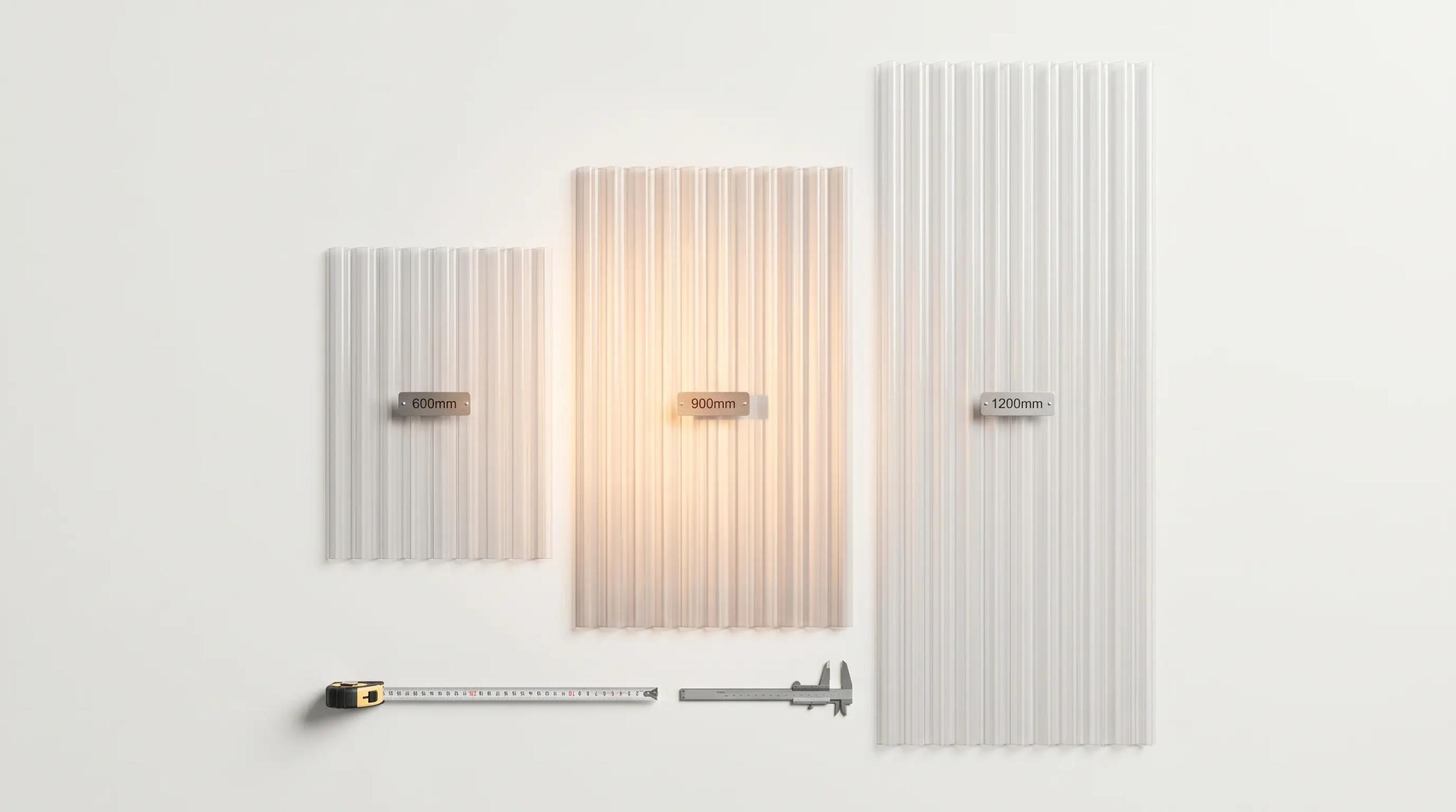
Panel width is not just a manufacturing choice. In standing seam polycarbonate roofing, it directly affects wind performance, thermal movement, visual flatness, installation efficiency, and long-term reliability.
For Coxwell standing seam systems, 900mm is the engineered standard width because it offers the best balance between performance and practicality for most commercial, industrial, institutional, and infrastructure roofing applications in India.
What Panel Width Actually Controls
Every standing seam polycarbonate panel spans between purlins along its length and between standing seams across its width. Under real site conditions, the panel must manage several forces at the same time: wind pressure, wind uplift, thermal expansion, self-weight, vibration, and, where applicable, snow or maintenance loads.
For a given panel thickness and system design, a wider panel generally:
- Deflects more between standing seams
- Shows oil canning more visibly
- Experiences greater absolute thermal movement
- Places higher demand on connector grip and seam stability
- Is more sensitive to wind-induced vibration
A narrower panel generally:
- Reduces unsupported panel width
- Improves visual flatness
- Reduces absolute lateral thermal movement
- Increases the number of seams and connectors per roof area
- Adds cost, labour, and joint lines
The right width is therefore not the narrowest or the widest possible panel. The right width is the point where structural performance, thermal movement, visual quality, installation speed, and cost all remain in balance.
For Coxwell standing seam polycarbonate roofing systems, that balance point is 900mm.
Why 600mm Is Usually Not the Best Choice
At first glance, a 600mm panel can look like a stronger option. Narrower panels mean more seams, more connector points, and shorter unsupported panel faces.
That can be useful in certain demanding cases, such as unusually high wind zones, long purlin spans, or project-specific load conditions. But for most standard commercial and institutional roofing applications, the advantage of going below 900mm is limited.
A 600mm panel increases:
- Aluminium connector consumption
- Cleat and fixing quantities
- Installation time
- Labour cost
- Number of joint lines across the roof
- Potential points requiring careful sealing and workmanship
The result is a system that costs more and takes longer to install, without giving a proportional performance benefit in typical applications.
This is why 600mm should be treated as a special-case width, not the default choice.
Why 1200mm Creates Performance Risk
A 1200mm panel is commercially attractive because it covers more area per sheet and reduces the number of visible seams. On paper, that can look efficient.
In practice, the wider unsupported panel face creates performance concerns.
1. Higher visible deflection
At 1200mm, the panel face has more room to flex between standing seams. Under wind pressure or suction, this can create visible waviness or oil canning.
Oil canning is not just an aesthetic issue. It is often a sign that the panel is working harder than it should under repeated loading.
2. Greater thermal movement
Polycarbonate has a high coefficient of thermal expansion compared with many building materials. Across a wider panel, the absolute movement increases.
For example, over a 50°C temperature range, a 1200mm-wide panel can experience approximately 4mm of lateral thermal movement. A 900mm-wide panel experiences approximately 3mm under the same condition.
That difference matters because the connector, seam, and fixing system must accommodate this movement repeatedly over the life of the roof.
3. Greater vibration risk
Wider panels are more prone to wind-induced movement and drumming because the larger panel face has lower stiffness across its unsupported width. On exposed roofs, this can affect acoustic comfort, visual stability, and long-term connection performance.
4. Specification risk
Many project specifications for standing seam polycarbonate roofing are written around a 900mm panel module. Where the intent is to control wind uplift, oil canning, vibration, and visual appearance, a 1200mm panel may not satisfy the project's performance expectations unless the full system has been specifically designed and validated for that width.
For this reason, 1200mm should not be treated as a simple cost-saving substitution for a 900mm standing seam system.
Why 900mm Is the Practical Engineering Standard
A 900mm panel provides the most reliable balance for Coxwell standing seam polycarbonate systems.
At 900mm:
- Panel deflection remains better controlled under standard design conditions
- Oil canning is reduced compared with wider panels
- Thermal movement remains within a manageable range for standard connector systems
- Wind uplift resistance is supported by a practical seam and connector spacing
- Installation remains efficient because each panel still covers meaningful area
- The finished roof maintains a clean, regular visual rhythm
- Cost remains practical compared with narrower-width systems
A 6m-long, 900mm-wide panel covers approximately 5.4 sqm. This gives good installation productivity while maintaining the panel width needed for dependable performance.
That is why 900mm is not simply a manufacturing preference. It is the width at which the system performs well without becoming unnecessarily expensive or visually unstable.
Recommended Specification Language
Specification language should be clear. Ambiguous wording can allow unwanted substitutions.
For example:
"Panel width shall not be more than 900mm" — This allows 600mm panels, which may increase cost and installation complexity.
"Panel width shall not be less than 900mm" — This can allow 1200mm panels, which may increase deflection, oil canning, and thermal movement risk.
The clearer specification is:
"Standing seam polycarbonate panel width shall be 900mm. Alternate widths shall not be used unless supported by project-specific structural calculations, wind-load validation, and written approval from the system manufacturer/consultant."
This removes confusion and protects the design intent.
Coxwell's Position
Coxwell manufactures its standing seam polycarbonate systems — including Multicell, X-Fix, Vivid, and Prism — in a standard width of 900mm.
This is a deliberate product engineering decision. It is based on the performance balance required for Indian roofing applications: wind resistance, thermal movement, visual flatness, installation efficiency, and long-term system reliability.
We do not promote 600mm as a default because it usually adds cost and complexity without proportional benefit.
We do not promote 1200mm as a direct substitute because the wider panel face can increase deflection, oil canning, vibration, and thermal movement risk.
For most standing seam polycarbonate roofing applications, 900mm is the right width because it gives the roof what it needs most: strength, stability, efficiency, and a clean finished appearance.
Next step
Speak to a Coxwell engineer.
Our team can help you specify the right system, review your BOQ, or answer technical questions about your project.