
How to Clean and Maintain Polycarbonate Roofing Sheets Without Damaging Them
Polycarbonate is low-maintenance, not no-maintenance. Here's the correct way to clean polycarbonate roofing and skylights, what damages the UV-protective surface, and a maintenance schedule to follow.
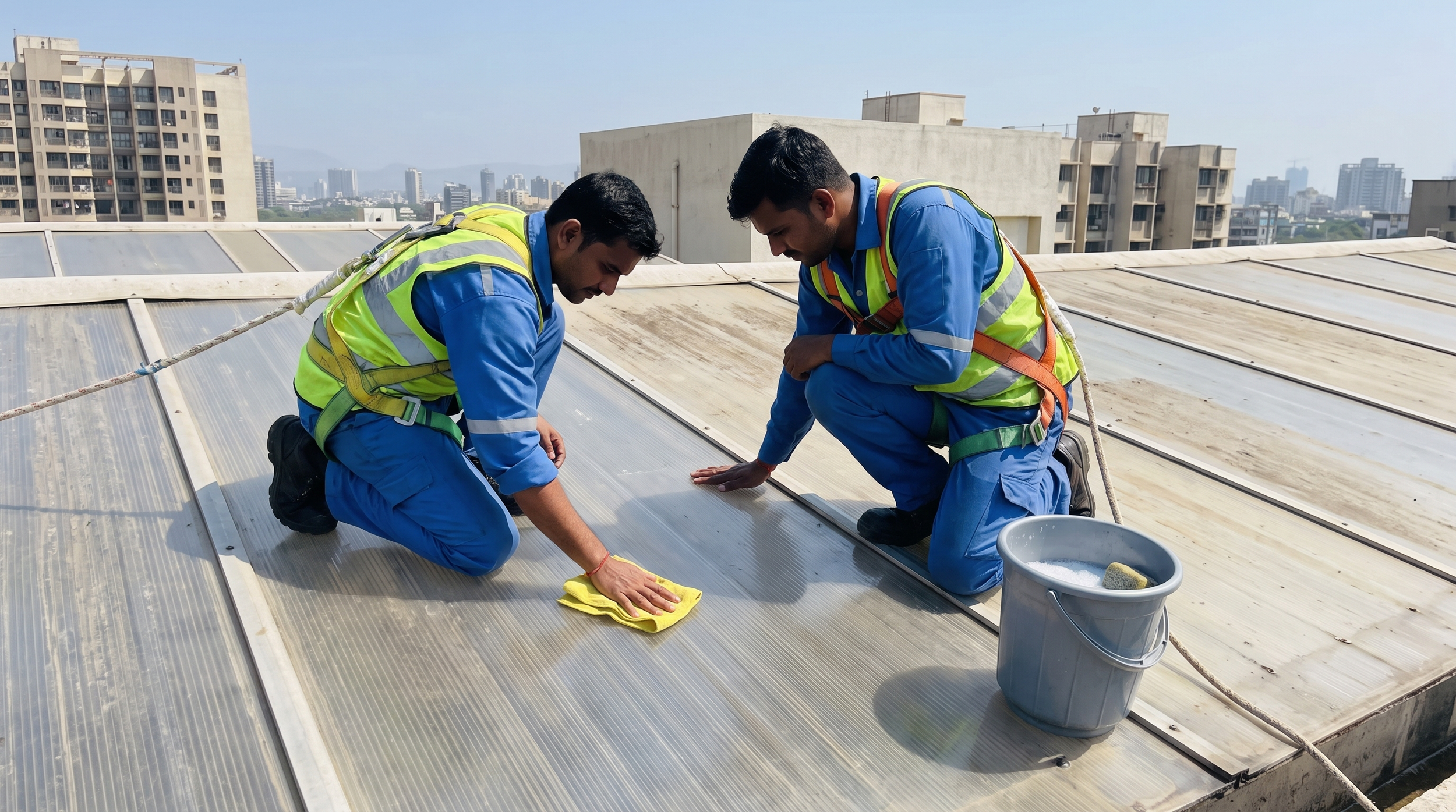
A well-specified polycarbonate roof can perform for 15–20 years. A poorly maintained one can look tired in three — not because the panel failed, but because dirt, wrong cleaning products, or careless handling scratched the UV-protective surface that was doing the actual work. Polycarbonate is a low-maintenance material, not a no-maintenance one, and the difference between the two is a short list of habits most owners are never told about.
This guide covers how to clean polycarbonate roofing and skylights correctly, what damages the panel permanently, and a simple maintenance schedule to keep a Coxwell roof performing for its full rated life.
Why Maintenance Matters More Than People Assume
Every polycarbonate roofing panel we manufacture carries a UV-protective co-extruded layer on the sun-facing surface — typically 45–50 microns thick. This layer is what prevents yellowing and embrittlement over time, as we cover in detail in our UV yellowing guide. That layer is thin, and it is the only thing standing between the panel and degradation from sunlight. Scrub it with the wrong tool often enough, and you're not cleaning the roof — you're removing its protection.
Beyond the panel itself, dirt and organic buildup block light transmission (the entire point of installing a translucent roof), trap moisture against fixing hardware, and in cold-storage or food-processing environments, can become a hygiene issue in their own right.
How to Clean Polycarbonate Roofing Correctly
What you'll need
- Warm water
- A mild, non-abrasive liquid detergent (dishwashing liquid works well)
- A soft microfibre cloth or soft-bristle brush
- A soft broom for loose debris
- A garden hose for rinsing (avoid pressure washers)
Step-by-step
- Clear loose debris first. Use a soft broom to remove leaves, twigs, and dust before introducing any liquid — this prevents grit from being dragged across the surface and scratching it.
- Mix a mild solution. A capful of liquid detergent per bucket of warm water is enough. Never use concentrated detergent directly on the panel.
- Wipe in the direction of the flutes. Multiwall panels have an internal rib structure running in one direction — always clean along this direction, never across it, to avoid pushing dirt into the joints.
- Rinse thoroughly with clean water before the soap solution dries on the surface, which can leave streaking.
- Dry with a soft, lint-free cloth if streak-free clarity matters (for skylights and facades in particular).
What to Never Do
- Never use a pressure washer. High-pressure water can force its way into panel joints and seams, and can abrade the UV-protective surface layer.
- Never use scouring pads, steel wool, or abrasive sponges. These leave micro-scratches that scatter light, dull clarity, and create channels where dirt accumulates faster next time.
- Never use ammonia-based, alkaline, or solvent-based cleaners. Standard glass cleaners are often ammonia-based and will attack polycarbonate's surface chemistry over time — always check the label.
- Never clean in direct, intense midday sun. Cleaning solution can dry too fast and streak; early morning or late afternoon is better.
- Never walk directly on multiwall panels without proper walk boards — even during cleaning. This is a common cause of stress cracking that has nothing to do with the cleaning product itself.
Most "polycarbonate roofs look worse than glass after a few years" complaints trace back to one of two causes: poor UV protection at the manufacturing stage, or years of pressure-washing and abrasive cleaning. Only one of those is preventable after installation — and it's this one.
A Simple Maintenance Schedule
| Frequency | Task |
|---|---|
| Monthly | Visual check for debris buildup, ponding water, or loose fixing caps |
| Twice yearly (pre- and post-monsoon) | Full clean per the steps above; clear gutters and drainage channels |
| Annually | Inspect end caps, aluminium U-profiles, and sealant tape for gaps or wear |
| After any major storm or hailstorm | Inspect for surface impact marks — see our hailstorm resistance guide |
| Every 3–5 years | Professional inspection of fixing system pull-out integrity, especially for standing seam roofs in high-wind zones |
If your site is near industrial pollution, coastal salt spray, or has overhanging trees, increase cleaning frequency — buildup accumulates faster and can etch into a neglected surface layer over time.
Maintenance and Your Warranty
Most manufacturer warranties on light transmission and yellowing assume reasonable maintenance — using pressure washers or abrasive cleaning can, in some cases, be grounds for a warranty claim to be reduced or denied, since the damage is mechanical rather than a material defect. We walk through exactly what to check in a polycarbonate warranty document in our warranty guide — it's worth confirming maintenance requirements in writing at the time of purchase, not after a claim is needed.
Signs You Need More Than Cleaning
Cleaning restores clarity, but it can't fix underlying problems. Book a professional inspection if you notice:
- Persistent drumming or rattling in wind — see our rain noise and anti-drumming guide
- Yellowing that doesn't improve after a proper clean
- Water staining or drip marks at panel joints, indicating a seal failure rather than dirt
- Visible sagging or flex between fixing points
Every Coxwell system ships with a documented maintenance guide matched to its specific UV protection and fixing details. Get in touch if you'd like a maintenance walkthrough for an existing installation, or to confirm the correct cleaning approach for your specific panel system.
Frequently asked questions
Can you pressure wash a polycarbonate roof?
No. High-pressure water can force its way into panel joints and seams and can abrade the thin UV-protective surface layer. Always clean with a soft cloth or brush, mild detergent, and a regular garden hose for rinsing.
What cleaning products should never be used on polycarbonate?
Avoid ammonia-based or alkaline cleaners (including many standard glass cleaners), solvent-based products, and any abrasive pad or scouring sponge — all of these can permanently damage the UV-protective co-extruded layer.
How often should polycarbonate roofing be cleaned?
A full clean twice a year, ideally before and after monsoon season, is the standard recommendation, with monthly visual checks in between. Sites near industrial pollution, coastal salt spray, or overhanging trees may need more frequent cleaning.
Does improper cleaning affect a polycarbonate warranty?
Yes, in many cases. Most warranties on light transmission and yellowing assume reasonable maintenance — damage from pressure washing or abrasive cleaning is mechanical, not a material defect, and can affect a warranty claim.
Next step
Speak to a Coxwell engineer.
Our team can help you specify the right system, review your BOQ, or answer technical questions about your project.