
Does Polycarbonate Roofing Make Noise in the Rain? Anti-Drumming Explained
Rain noise is the top objection homeowners raise about polycarbonate roofing. Here's what actually causes it, what anti-drumming construction changes, and how to specify a quieter roof.
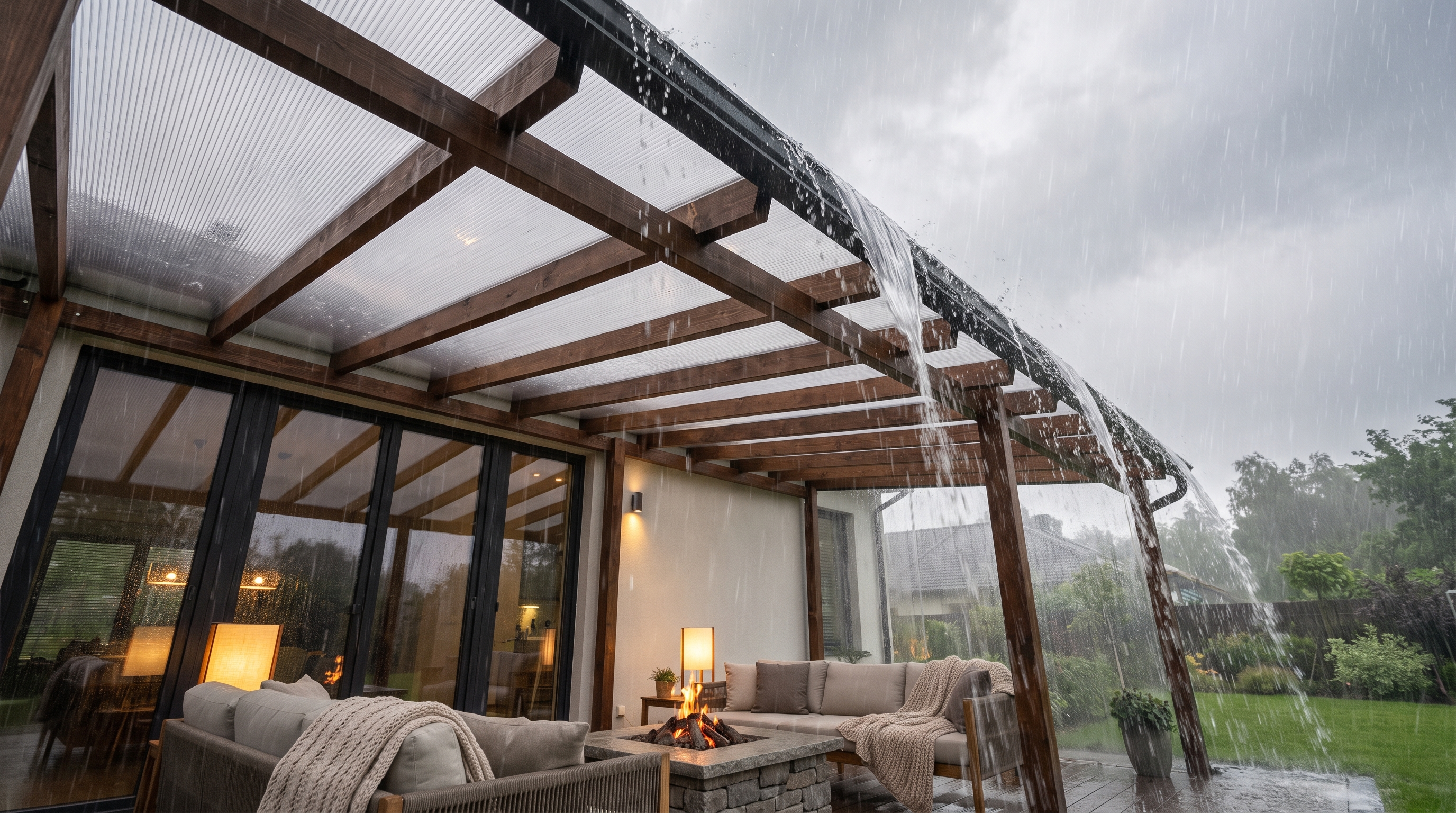
"Won't it sound like a drum every time it rains?" is the question we hear most often from homeowners considering a polycarbonate roof over a pergola, verandah, or home skylight — usually from someone who's stood under a cheap corrugated sheet roof during a monsoon downpour and never wants to repeat the experience. It's a fair concern, and the honest answer is: it depends entirely on how the panel and structure are built, not on the fact that it's polycarbonate.
This post explains what actually causes rain noise on a translucent roof, why some polycarbonate installations are noticeably louder than others, and what to ask for if a quiet roof matters to you.
What Actually Causes "Drumming" Noise
Drumming happens when a roof surface acts like the skin of an actual drum: a thin, unsupported, resonant panel struck by raindrops vibrates and amplifies the impact sound across its whole surface. Three factors drive how loud this gets:
- Panel construction — a thin, flat, single-skin sheet resonates far more than a ribbed, multi-wall structure with internal air chambers that dampen vibration.
- Support spacing and rigidity — a panel that flexes between supports transmits more impact energy as audible vibration than one held rigidly across a tighter structural grid.
- Roof pitch and drainage — a flatter roof holds rain contact longer per drop and can develop a more continuous drumming pattern than a well-pitched roof that sheds water quickly.
Notice that "polycarbonate" isn't on this list as an inherent cause. The material itself isn't what makes a roof loud — the construction is.
Why Multiwall and Multicell Polycarbonate Is Quieter Than People Expect
This is the detail most homeowners don't know: correctly specified multiwall and multicell polycarbonate roofing is generally quieter in rain than corrugated metal sheeting of comparable use, and closer to (though still not identical to) a conventional tiled or membrane roof. The internal rib structure that gives these panels their thermal performance also acts as a built-in damping layer — it breaks up the resonant vibration a flat single-skin surface would otherwise carry. We've explained how this same rib structure contributes to strength and thermal performance in our multiwall vs multicell vs solid polycarbonate guide.
Metal sheeting, by contrast, is a thin, largely unstructured surface that transmits impact vibration efficiently across its whole span — which is why bare metal roofing over an occupied space is one of the loudest common roofing choices in heavy rain, unless it's fitted with a separate acoustic underlay.
The comparison people actually need isn't "polycarbonate vs silence" — it's polycarbonate vs the metal or FRP sheet they were about to install instead. On that comparison, a properly specified multiwall panel usually wins.
What Makes One Polycarbonate Installation Louder Than Another
| Factor | Quieter outcome | Noisier outcome |
|---|---|---|
| Panel profile | Multiwall / multicell (ribbed, air-chambered) | Thin solid sheet, especially under-thickness budget sheet |
| Support spacing | Tighter purlin/rafter grid matched to span table | Wide, under-supported spans that flex under impact |
| Roof pitch | Adequate pitch for fast water shedding | Near-flat installation with prolonged rain contact |
| Fixing method | Standing seam with proper cleats, no rattling loose fasteners | Face-fixed fasteners that loosen and rattle over time |
| Structure below | Rigid frame, sometimes with acoustic gasket at fixings | Lightweight or flexing substructure that amplifies vibration |
What You Can Actually Do to Reduce Rain Noise
- Choose multiwall or multicell over solid single-skin sheet for any occupied or frequently used space — the internal structure is your primary acoustic damping mechanism.
- Don't under-specify thickness for the span. A panel that flexes between supports is a panel that resonates more; this is the same span-table logic we cover in our polycarbonate thickness guide.
- Insist on a standing seam fixing system with proper cleats rather than face-fixed fasteners, which loosen over time and introduce rattling that's separate from — and often worse than — the rain noise itself.
- Get the pitch right. A roof pitched adequately for fast drainage reduces the duration of sustained rain contact per storm.
- If the space is used daily — a home office extension, a covered seating area — ask your supplier or installer whether an acoustic underlay or gasket detail is available at the fixing points for additional damping.
Setting Realistic Expectations
No transparent or translucent roofing material will be perfectly silent in heavy rain — that includes glass, which resonates in its own way under sustained downpour. The realistic goal with a well-specified polycarbonate roof isn't silence; it's a noise level well below cheap corrugated metal or thin FRP sheet, and comfortable enough for daily use under a pergola, verandah, or home extension. If you've had a bad experience with a noisy translucent roof before, it's worth asking directly what profile and fixing system was used — in most cases, the noise problem traces back to under-specified sheet or face-fixed fasteners, not the material category itself.
Coxwell's multiwall and multicell polycarbonate systems use standing seam fixing with proper cleats — no face-fixed fasteners to rattle loose over time. Talk to our team about the right profile and thickness for a quieter roof over your home or outdoor living space.
Frequently asked questions
Is polycarbonate roofing loud in the rain?
It depends on the panel construction, not the material itself. Thin, single-skin sheet on a wide, under-supported span can be noisy. Properly specified multiwall or multicell polycarbonate, with its internal ribbed air-chamber structure, dampens vibration and is generally quieter in rain than bare corrugated metal sheeting.
Is polycarbonate louder than metal roofing in the rain?
Usually not, when compared fairly. Metal sheeting is a thin, largely unstructured surface that transmits impact vibration efficiently, making bare metal roofing one of the louder common roofing choices in heavy rain. Multiwall polycarbonate's internal rib structure provides more inherent acoustic damping.
How can I make a polycarbonate roof quieter?
Choose multiwall or multicell panels over solid single-skin sheet, don't under-specify thickness for your support spacing, use a standing seam fixing system with proper cleats instead of face-fixed fasteners, and ensure adequate roof pitch for fast water drainage.
Does fixing method affect roof noise?
Yes, significantly. Face-fixed fasteners can loosen over time and introduce a separate rattling noise on top of rain impact sound. A standing seam system with properly engineered cleats holds the panel more rigidly and avoids this additional noise source.
Next step
Speak to a Coxwell engineer.
Our team can help you specify the right system, review your BOQ, or answer technical questions about your project.