
Polycarbonate Sheet Thickness Guide: How to Choose Between 4mm and 40mm
Polycarbonate thickness isn't chosen by price or gut feel — it's driven by span, load, and application. Here's how to match thickness to your project correctly.
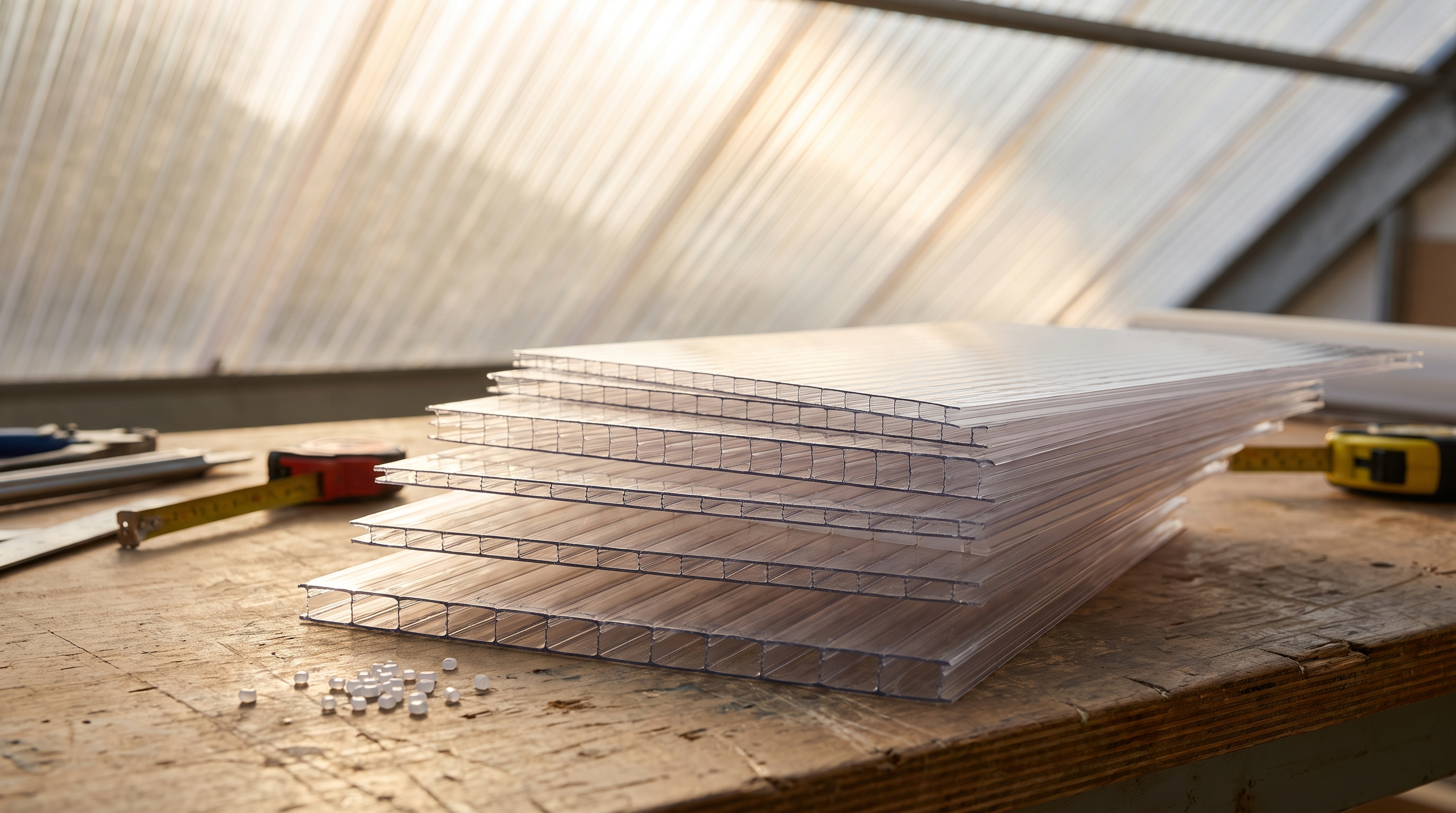
"What thickness do I need?" is the first question almost every buyer asks — and the one most suppliers answer badly. Thickness gets sold as a simple upgrade path: thicker is stronger, thinner is cheaper, pick your budget. In reality, thickness is an engineering variable tied to span, load, panel profile, and application, and getting it wrong causes two very different problems: over-thick panels that waste money and under-perform on light transmission, or under-thick panels that sag, flex, and fail years before they should.
This guide walks through the standard thickness range used in polycarbonate roofing and glazing, what each is actually built for, and how to reason through the decision instead of guessing.
Thickness Alone Doesn't Tell You Strength — Profile Does
The single biggest misunderstanding buyers have is treating "thickness" as one number that behaves the same way across every product. It doesn't. A 10mm solid polycarbonate sheet and a 10mm multiwall polycarbonate panel are not comparable — the multiwall panel gets its stiffness from an internal rib structure (the air-cell walls between the outer skins), not from mass alone. This is why panel profile and thickness have to be read together, never separately.
We've covered how these profiles differ structurally in our multiwall vs multicell vs solid polycarbonate guide — read that alongside this one if you haven't settled on a profile yet.
The Standard Thickness Range and What Each Is Typically Used For
| Thickness | Typical profile | Common application |
|---|---|---|
| 4mm | Twin-wall / multiwall | Small canopies, garden structures, short-span DIY roofing |
| 6mm–8mm | Multiwall | Carports, pergolas, small skylights, residential verandahs |
| 10mm | Multiwall / multicell | Home skylights, walkway canopies, moderate-span commercial glazing |
| 16mm | Multicell (X-Fix, Prism-type systems) | Standing seam industrial roofing, wider purlin spacing, factory and warehouse daylighting |
| 25mm–32mm | Multicell / structured | Long-span industrial roofs, railway canopies, sports halls needing extended purlin spacing |
| 40mm | Multicell (Snapwall-type systems) | Thermally demanding applications — cold storage, insulated roofs, façades needing near-double-glazed U-values |
These ranges are typical, not universal — every manufacturer's rib geometry, resin grade, and standing seam design shifts the exact load table. Always ask your supplier for the tested span table for the specific thickness and profile you're ordering, not a generic industry chart.
The Variable That Actually Drives the Decision: Purlin Span
Thickness exists to resist deflection between structural supports. The wider your purlin or rafter spacing, the more a panel has to span unsupported — and the more thickness (or rib depth) it needs to avoid visible sag, ponding, or long-term creep. This is why the right question to ask isn't "what thickness is standard for a factory roof" — it's "what is my actual purlin spacing, and what does the tested span table say for that spacing at this thickness."
Reducing purlin spacing lets you specify a thinner, more light-efficient panel. Increasing spacing to save on structural steel usually means stepping up in thickness to compensate. This trade-off should be worked out between the structural engineer and the roofing supplier before panels are ordered — not discovered after installation when a panel visibly bows between supports.
Thickness Also Trades Off Against Light Transmission and U-Value
More material between the two outer skins means more surfaces for light to pass through, which generally reduces light transmission (LT) as thickness increases within the same profile family. It also generally improves thermal performance — a thicker multicell panel with more internal air chambers gives a lower U-value, closer to insulated glazing performance. We've broken down exactly how these two properties interact, and why neither should be chosen in isolation, in our guide to U-value, light transmission, and lux.
In practice, this means thickness isn't just a structural decision — it's also a daylighting and thermal-comfort decision. A cold storage facility prioritising insulation will happily trade some LT for a thicker, lower-U-value panel. A daylight-driven warehouse roof prioritising illuminance may deliberately stay at a moderate thickness and instead reduce purlin spacing to hit the span requirement without sacrificing light.
Climate and Load: Don't Under-Specify in Hail or High-Wind Regions
Thickness (combined with profile and fixing system) also determines how a roof performs under hail impact and wind uplift. Projects in known hail corridors or cyclone-prone coastal regions should specify toward the higher end of the recommended thickness range for their application, not the minimum that technically clears the span table. We've covered this in detail in our guide to polycarbonate roofing and hailstorm impact resistance — the dart drop test result for a given thickness is only meaningful when it's tested after UV exposure, not on a fresh sheet.
The Mistake: Choosing Thickness by Price, Not by Span Table
The most common failure mode we see on site isn't a manufacturing defect — it's a panel that was specified one step thinner than the span required, because it was cheaper per square metre. The visible symptoms show up 12–24 months in: mid-span sagging, ponding on low-slope roofs, and stress whitening near fixing points under wind load. Replacing an under-specified roof costs far more than the thickness upgrade would have at the outset — a pattern we've written about more broadly in why the cheapest polycarbonate often becomes the most expensive one on site.
Thickness is not a budget lever you pull independently of span. It's the output of a calculation: purlin spacing, wind load, and profile geometry go in; the correct thickness comes out.
A Simple Framework for Choosing Thickness
- Confirm your purlin or support spacing first — this is the single biggest input into the decision.
- Ask your supplier for the tested span table for their specific profile and thickness range, not a generic chart.
- Factor in your climate — hail-prone and high-wind regions should specify toward the higher end of the acceptable range.
- Balance against your daylighting and thermal goals — thickness affects LT and U-value, not just strength.
- Never let price alone move you a thickness tier down from what the span table recommends.
Coxwell manufactures multiwall and multicell polycarbonate systems from 4mm through 40mm — Multicell, X-Fix, Vivid, Prism, and Snapwall — each with tested span tables for the profile and thickness you're specifying. Talk to our technical team to match thickness to your actual purlin spacing and climate conditions before you order.
Frequently asked questions
What thickness of polycarbonate sheet do I need for a roof?
It depends primarily on your purlin or support spacing, wind and hail load, and panel profile — not on a single standard number. Ask your supplier for the tested span table for the specific profile and thickness range you're considering, and never specify below what that table recommends for your actual spacing.
Is thicker polycarbonate always stronger?
Generally yes within the same profile family, but thickness alone isn't comparable across different profiles. A multiwall or multicell panel gets much of its stiffness from its internal rib structure, so a thicker panel in one profile can outperform a thinner panel in another even at a similar nominal thickness.
Does polycarbonate thickness affect light transmission?
Yes. Within the same profile, increasing thickness generally reduces light transmission because there is more material and internal structure for light to pass through, while typically improving thermal performance (lower U-value). Thickness should be chosen with both structural and daylighting requirements in mind.
What thickness is used for industrial roofing versus home skylights?
Home skylights, carports, and pergolas typically use 6mm–10mm multiwall panels over shorter spans. Industrial and warehouse roofing typically uses 16mm and above multicell standing seam systems to handle wider purlin spacing, with 25mm–40mm reserved for long-span or thermally demanding applications like cold storage.
Next step
Speak to a Coxwell engineer.
Our team can help you specify the right system, review your BOQ, or answer technical questions about your project.