
Polycarbonate Roofing vs Metal Sheets: The Complete Comparison for Indian Projects
Comparing polycarbonate and metal (GI) roofing sheets for your next project? This guide covers upfront cost, daylighting, thermal performance, lifespan, and the hybrid approach that most Indian industrial buildings get right.
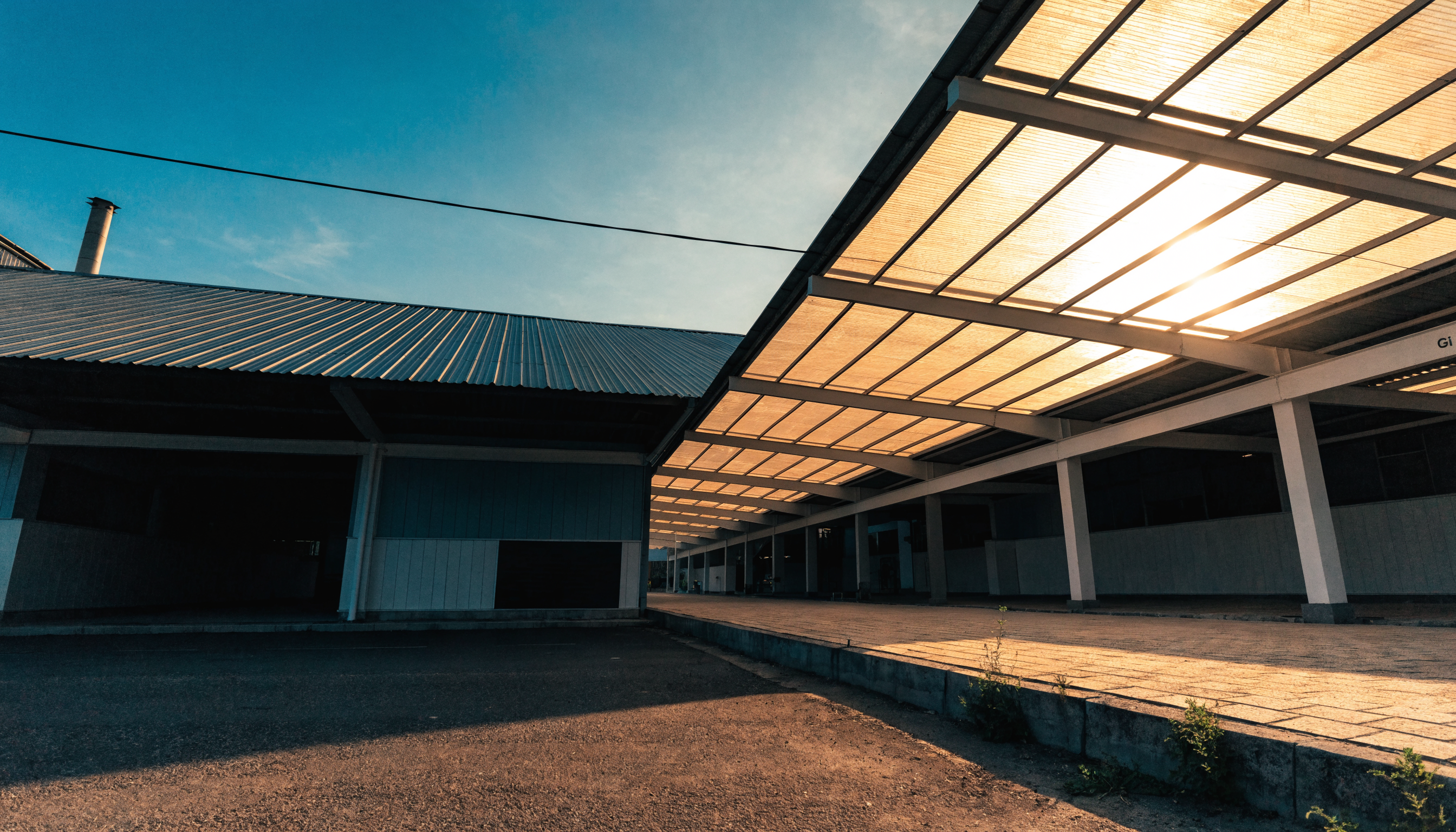
Every year, millions of square metres of industrial and commercial roofing are installed across India. Most buyers face the same question at the same moment: polycarbonate sheets or metal sheets — which one is right for this project?
The honest answer is that it depends on what you are building, where, and for how long. This guide gives you the framework to make that call with confidence — covering upfront cost, lifecycle cost, thermal performance, daylighting, and the specific conditions that make each material the right choice.
The Core Difference
Metal sheets (primarily GI corrugated, colour-coated steel, or aluminium) are opaque load-bearing panels. Polycarbonate sheets are translucent thermoplastic panels that let in natural light while providing weatherproof enclosure. They are not the same type of material competing for the same function — they are different tools that are sometimes interchangeable, and often not.
The comparison only makes sense when you define what you are optimising for: cost, light, thermal performance, lifespan, or aesthetics.
Upfront Cost
Metal sheets cost significantly less per square metre than polycarbonate. GI corrugated sheets are typically priced between ₹250–₹400/m² in India, while polycarbonate roofing panels range from ₹800–₹2,500/m² depending on thickness, structure, and system.
That gap is real. But it is only meaningful if you account for what each material is actually delivering.
When a project replaces a portion of a metal roof with polycarbonate daylighting strips — the most common application — the cost comparison changes entirely. The polycarbonate covers 10–20% of the roof area, while eliminating the need for artificial lighting during daylight hours across the entire floor. The incremental cost of polycarbonate strips is often recovered within 18–36 months through energy savings alone.
Daylighting: The Variable Metal Cannot Compete On
Metal roofing is opaque. It blocks 100% of natural light. Every square metre of metal roofing inside a factory or warehouse creates dependence on artificial lighting during daylight hours.
Polycarbonate panels transmit 40–88% of visible light depending on the product and profile. A well-designed polycarbonate daylighting system can eliminate artificial lighting entirely during working hours — or reduce it by 60–80%.
Consider a 5,000 m² warehouse in Rajasthan:
- Electricity cost for lighting: approximately ₹18–25/m²/year
- Annual lighting savings with 15% polycarbonate daylighting coverage: ₹1.35–1.88 lakh/year
- Payback on the additional polycarbonate cost: typically 2–4 years
India has 250–300 sunny days per year in most regions. The daylighting advantage of polycarbonate compounds significantly over a 20-year roof life.
Thermal Performance
This is where polycarbonate's cellular structure provides its biggest functional advantage over metal.
Metal roofing has very high thermal conductivity — it heats up rapidly in the sun and transfers that heat directly into the space below. Without adequate insulation (which adds cost and complexity), a metal-roofed building in Indian summers becomes extremely uncomfortable and requires significant mechanical cooling.
Multiwall polycarbonate panels create insulating air chambers within the sheet structure. A 16mm twin-wall panel offers a U-value of approximately 1.7 W/m²K; a 25mm five-wall system can reach 0.99 W/m²K — comparable to double-glazed glass. This means:
- Less solar heat entering the space through the roof
- Reduced HVAC cooling load in summer
- Lower AC running costs over the building's lifetime
For industrial projects in high-temperature Indian climates, the thermal performance difference between polycarbonate and uninsulated metal is not marginal — it can determine whether a space is habitable without air conditioning during peak summer.
Durability and Lifespan
Good-quality polycarbonate roofing from a reputable manufacturer, properly installed, carries a material warranty of 10–15 years and a practical lifespan of 20+ years. The key requirement is UV protection: polycarbonate without a co-extruded UV-stabilising layer degrades within 3–5 years — yellowing, becoming brittle, and losing transparency. All Coxwell panels carry a co-extruded UV layer on both faces.
GI corrugated and colour-coated metal sheets have similar practical lifespans — typically 10–20 years depending on coating quality, local weather, and proximity to the coast (salt spray accelerates corrosion). In high-humidity coastal environments, polycarbonate has a maintenance advantage: it does not corrode.
What metal does better: structural load capacity. Thick steel panels handle wind and snow loads more robustly than equivalent polycarbonate panels. For roofs with unusually heavy point loads or extreme wind conditions, the structural spec should drive material selection.
Weight and Installation
Polycarbonate panels are significantly lighter than metal sheets of comparable span — typically 1.5–3.5 kg/m² versus 4–8 kg/m² for steel. This affects:
- Structural steel requirements (lighter secondary structure possible)
- Installation speed and labour cost
- Load on existing structures in retrofit projects
Modern standing-seam polycarbonate systems like Coxwell's Multicell use dry-fit interlocking joints that can be installed without sealants — reducing installation time and eliminating a common source of long-term leaks.
When to Specify Each Material
| Project Requirement | Better Choice |
|---|---|
| Maximum upfront cost savings | Metal sheets |
| Natural daylighting of interiors | Polycarbonate |
| Thermal comfort without AC | Polycarbonate (multiwall) |
| Heavy structural loads / extreme spans | Metal |
| Coastal / high-humidity environment | Polycarbonate |
| 20-year energy cost optimisation | Polycarbonate with daylighting |
| Low-budget temporary structure | Metal |
| Aesthetics / architectural glazing | Polycarbonate |
Many of India's most efficient industrial buildings combine both materials: metal sheets for the bulk of the roof, with polycarbonate daylighting panels covering 10–20% of the area in strategic strips. This hybrid approach captures the structural and cost benefits of metal while delivering the daylighting and thermal performance of polycarbonate.
Making the Right Specification Decision
The question is not which material is "better." It is which material is right for your project constraints, climate, and 20-year cost model. A warehouse in Surat optimised for energy cost looks different from a cold storage facility in Pune, which looks different from a residential pergola in Bengaluru.
Coxwell's technical team works with architects, contractors, and project owners to specify the right system — including hybrid designs that combine polycarbonate daylighting with metal structure. If you are pricing a new industrial roof or retrofitting an existing one, the team will model the daylighting and energy savings for your specific floor area and climate zone.
Request a technical specification →
Related reading: U-Value vs Light Transmission vs Lux → | Polycarbonate roofing systems → | Multicell multiwall panels →
Frequently asked questions
Is polycarbonate roofing more expensive than metal sheets?
Polycarbonate roofing panels cost more per square metre than GI metal sheets (₹800–2,500/m² vs ₹250–400/m²). However, when accounting for 20-year energy savings from daylighting and reduced HVAC load, the total cost of ownership for polycarbonate daylighting systems is often lower than all-metal alternatives.
How long do polycarbonate roofing sheets last in India?
High-quality polycarbonate sheets with co-extruded UV protection last 20+ years in Indian conditions. Look for panels with a minimum 10-year transparency warranty. Products without proper UV protection may yellow and degrade within 3–5 years.
Can I mix polycarbonate and metal sheets on the same roof?
Yes — a hybrid approach is the most common specification for Indian industrial buildings. Metal sheets cover the bulk of the roof for structural efficiency and cost, while polycarbonate strips (typically 10–20% of roof area) provide daylighting. Coxwell's systems are engineered to interface with standard metal roofing profiles.
Next step
Speak to a Coxwell engineer.
Our team can help you specify the right system, review your BOQ, or answer technical questions about your project.