
Daylighting Retail Stores and Showrooms: Why the Right Skylight Sells More Than It Lights
Retail daylighting isn't just about brightness — it affects how true colours look, how long customers stay, and energy costs. Here's how to specify polycarbonate skylights for stores and showrooms.
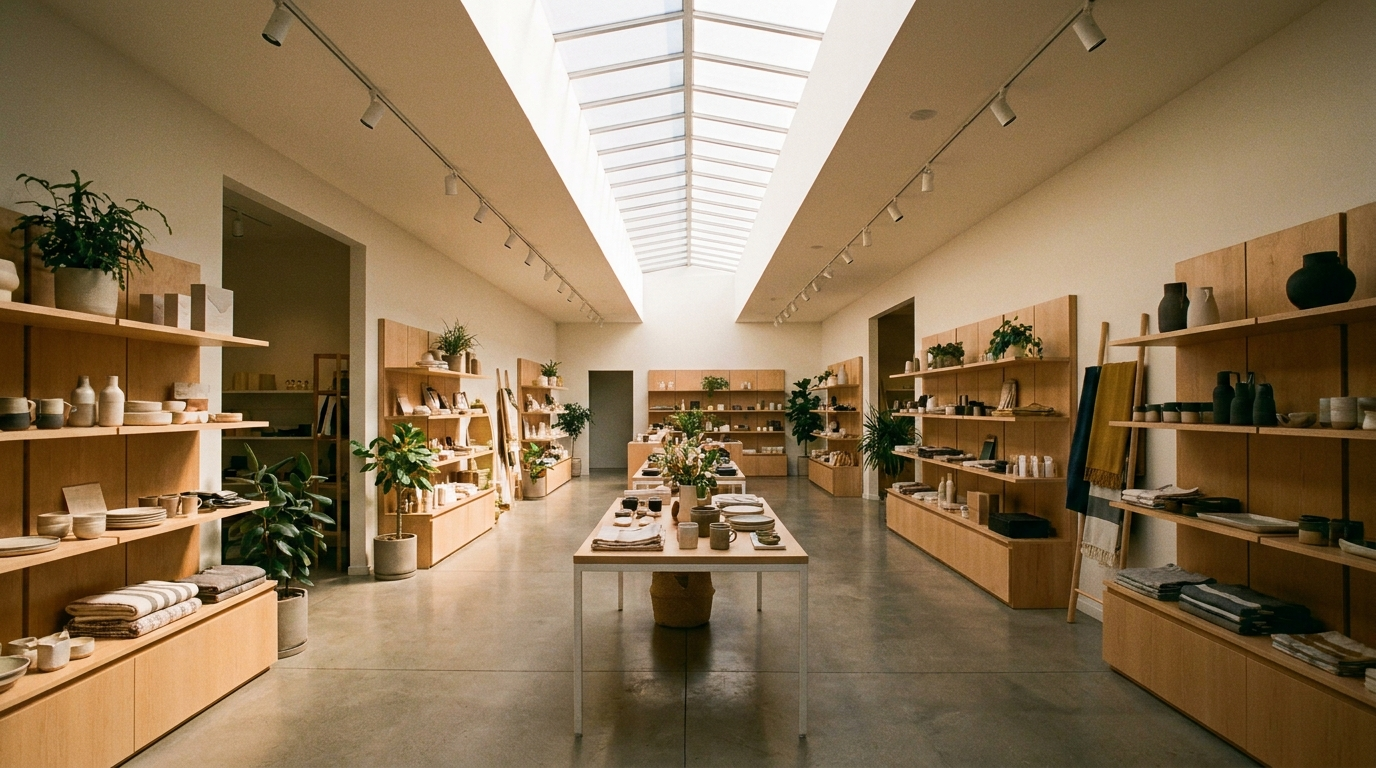
Walk into two showrooms selling the same product line and you can usually tell within seconds which one was lit with daylight in mind. One feels flat, relies entirely on spotlights, and runs its HVAC hard by mid-morning. The other feels open, product colours read true, and the lighting bill is noticeably lower. The difference is rarely the fixtures — it's the roof.
Retail and showroom daylighting gets far less attention than warehouse or factory daylighting, but the design stakes are arguably higher: customers judge fabric colour, paint finish, tile shade, and product quality under whatever light is falling on them. Get the skylight specification wrong and you're not just wasting energy — you're changing how your merchandise looks.
Why Retail Daylighting Is a Different Brief
Most daylighting guidance is written for warehouses and factories, where the goal is simply "enough lux to work safely, at the lowest energy cost." Retail is different on three counts:
- Colour accuracy matters commercially. A customer who sees a garment or tile under warm, yellow-shifted light and then sees it differently outside will often feel misled — and may return it.
- Dwell time is a business metric. Retail research consistently links comfortable, well-daylit environments with longer browsing time and higher basket sizes, compared to harshly lit or gloomy alternatives.
- Glare has a direct cost. A bright hotspot falling across a display case or POS counter isn't just uncomfortable — it actively hides the product it's supposed to sell.
This means the panel choice that works perfectly for a factory floor can be the wrong choice for a showroom.
Light Transmission: Aim for the Middle, Not the Maximum
It's tempting to specify the highest light transmission (LT) polycarbonate available on the assumption that more daylight is always better. For retail, that's usually a mistake. As we cover in our glare guide, high-LT clear panels placed directly over a shop floor create sharp bright patches that shift through the day and compete with your merchandising lighting rather than complementing it.
Most well-daylit retail interiors we've worked on land in a moderate LT range with a diffusing panel structure — enough daylight to reduce reliance on artificial lighting during store hours, without creating the kind of harsh patchwork that a clear, high-LT skylight produces. A diffused Multicell or opal-tinted system spreads light evenly across the shop floor instead of dumping it in one column under the opening.
Colour Rendering Is the Metric Retail Buyers Usually Miss
Light transmission tells you how much light gets through. It says nothing about how accurately that light renders colour. A panel can have excellent LT and still shift colour temperature enough to make merchandise look subtly wrong to a trained eye — this is a separate spec worth understanding on its own, which we cover in detail in our CRI guide. For any showroom selling colour-sensitive product — apparel, paint, tile, furniture finishes, jewellery — this is not a minor technicality. Ask your supplier for the colour rendering behaviour of the specific panel colour and thickness you're specifying, not just its LT percentage.
Panel Colour and Diffusion: Match to the Merchandise
Our colour guide covers this in depth, but the short version for retail: clear panels maximise brightness but transmit the most heat and the sharpest hotspots; opal panels diffuse light evenly and soften shadows, which is usually the better default for sales floors; bronze and tinted panels cut heat and glare aggressively but shift the colour temperature of everything beneath them — rarely desirable where product colour matters.
A pattern that works well in practice: opal or lightly diffused panels over the general shop floor, with any clear or higher-LT sections reserved for entrance atria or feature displays where a brighter, more dramatic wash of light is the intended effect rather than a liability.
Lux Targets for Retail Spaces
Our lux levels reference guide lists recommended illuminance by building type — retail sales floors typically need meaningfully more lux than a general circulation area, with feature/display zones often specified higher still. The point of daylighting a retail space isn't to hit the entire lux target from the skylight alone; it's to reduce how much artificial lighting has to run during daylight hours while staying inside a comfortable, glare-free range. A daylight simulation, not a guess, should confirm where you land — see our daylighting brief guide for how that process works.
Heat Gain: The Silent Retail Cost
Retail interiors are occupied for long hours, often with HVAC running continuously to keep customers comfortable. A skylight with poor thermal performance doesn't just cost more to run — it can make the zone directly beneath it noticeably warmer than the rest of the floor, which shoppers do notice. Ask for the tested U-value of any panel you're considering, not just its light transmission; our U-value vs light transmission vs lux guide explains why these are three separate numbers and why a supplier quoting only one of them isn't giving you the full picture.
A Practical Retail Daylighting Checklist
- Specify diffused (opal or Multicell) panels over general sales floor areas rather than clear, high-LT sheets
- Ask for colour rendering behaviour alongside light transmission, especially for colour-sensitive merchandise
- Reserve clear/high-LT panels for atria, entrances, or deliberate feature-lighting zones
- Confirm U-value to control heat gain over long occupied hours
- Run a daylight simulation against your actual store layout rather than relying on panel spec sheets alone
- Coordinate skylight placement with fixture and shelving layout so daylight and artificial lighting work together, not against each other
Coxwell supplies diffused and clear polycarbonate daylighting systems — Multicell, Prism, Vivid and more — for retail, showroom, and commercial interiors across India. Talk to our technical team about the right panel and layout for your store.
Frequently asked questions
What light transmission is best for a retail showroom skylight?
Most well-daylit retail interiors use a moderate light transmission with a diffusing panel structure (such as opal or Multicell) rather than the highest available clear light transmission. High-LT clear panels tend to create harsh, shifting hotspots that compete with merchandising lighting rather than complementing it.
Does the colour of a polycarbonate skylight affect how products look in-store?
Yes. Panel colour and structure affect colour rendering, not just brightness. Tinted panels like bronze shift colour temperature and can make merchandise look different than it will outdoors, which matters for colour-sensitive products like apparel, paint, or tile.
Can retail daylighting actually reduce lighting costs?
Yes, when specified correctly. Diffused daylighting reduces how much artificial lighting needs to run during store hours, but the panel and layout need to be matched through a daylight simulation rather than assumed from a spec sheet, to avoid glare or excess heat gain.
Should skylights be placed directly over display cases?
Generally no with clear panels, since a hotspot can wash out or glare on the display it's meant to highlight. Diffused panels are safer over general merchandising areas, with clear or higher-LT sections better reserved for entrances or deliberate feature-lighting zones.
Next step
Speak to a Coxwell engineer.
Our team can help you specify the right system, review your BOQ, or answer technical questions about your project.