
How to Calculate Polycarbonate Sheet Quantity for Your Roof: A Step-by-Step Estimating Guide
Ordering too few sheets stalls the job; ordering too many wastes money. Here is a simple step-by-step method to estimate polycarbonate roofing sheets, with a worked example.
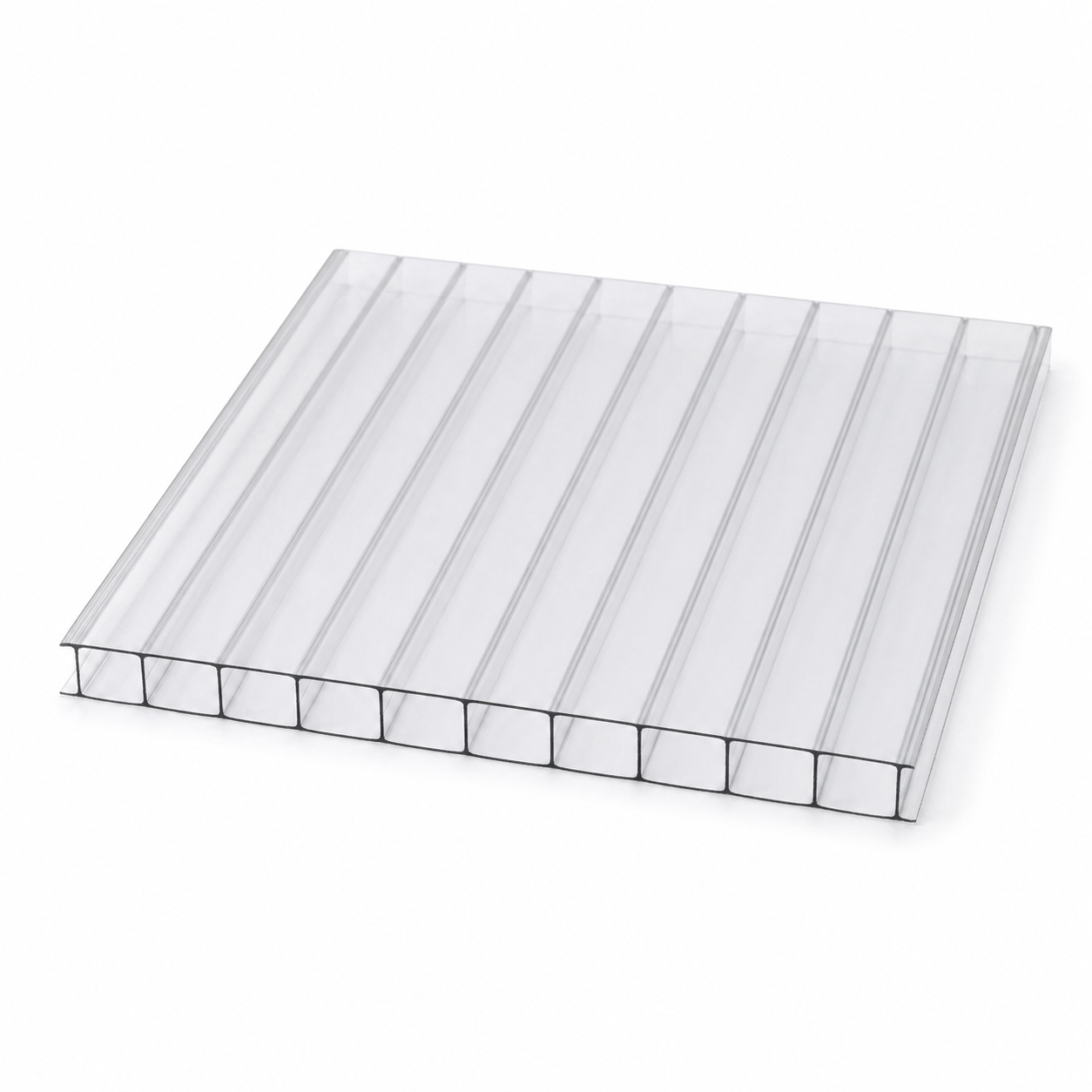
Estimating polycarbonate roofing looks simple: measure the roof, divide by the sheet size, order. In practice, three things trip people up: the sheet's effective width is less than its nominal width, sheets must overlap or interlock, and cutting always creates wastage. Get these wrong and you either run short mid-installation or pay for sheet you never use.
This guide gives you a clear method to estimate the quantity of polycarbonate sheets, with a worked example. It is meant for contractors, builders and homeowners. For a formal quotation, always confirm against the exact product data from your supplier.
Step 1: Measure the Roof Area That Will Be Covered
Measure the actual surface to be covered, not just the floor plan. For a flat or single-slope roof, multiply length by the sloping width.
- Rafter length, not plan width. On a pitched roof the surface is longer than the horizontal span. Measure along the slope.
- Add overhangs. Include eaves and verge projections that will also be covered.
- Break complex roofs into rectangles and add them up.
- Exclude openings such as vents, skylights in a different material or services.
Write down the roof length along the ridge or eaves (this decides the number of sheets across) and the rafter length (this decides sheet length).
Step 2: Use Effective Cover Width, Not Nominal Width
Each system covers less than the sheet's overall width because of the overlap or interlock. The width a single sheet actually covers once installed is the effective cover width. For standing seam and interlocking systems this is set by the profile. Our article on why a 900 mm panel width is common explains how width affects structure, handling and wastage. Always take the effective cover width from the product data sheet.
Number of sheets across = roof length along the eaves / effective cover width, rounded up.
Step 3: Choose Sheet Length and Plan Cuts
Where possible, use a single sheet length from eaves to ridge, which avoids horizontal laps and reduces leak risk. If the rafter is too long to span in one piece, plan an end lap at a purlin and add the overlap length to your quantity. Check transport and handling limits too, as very long sheets are difficult to carry and fix on site.
Also check the sheet's minimum roof pitch and maximum purlin spacing. Wider purlin spacing needs thicker sheet or stiffer profiles. This ties into choosing the right thickness, which affects both strength and cost.
Step 4: Add Wastage
Wastage depends on roof shape. A simple rectangular roof that matches the sheet module wastes very little. Hips, valleys, curves, angled cuts and awkward dimensions waste more. As a planning allowance many estimators add a modest percentage on top of the net quantity, higher for complex roofs. Treat it as an estimate and refine it with your supplier's advice.
Step 5: Do Not Forget the Accessories
The sheet is only part of the roof. A leak-free polycarbonate roof depends on its accessories, and these should be in your estimate:
- Base channels, connecting profiles and cap profiles
- Ridge, eaves and end closures
- Fasteners with sealing washers
- Anti-dust or breather tapes for multiwall sheet ends
- Sealants compatible with polycarbonate
- Flashings, gutters and edge trims where needed
Accessories are the usual source of cost gaps between quotations. Our quotation checklist and guide to reading a polycarbonate BOQ show how to compare like for like.
A Worked Example
Suppose you are roofing a rectangular shed canopy with these dimensions, and a system with an effective cover width of 0.9 m (confirm the real figure from the datasheet):
- Length along the eaves: 12 m
- Rafter length including overhang: 5.5 m
- Roof area: 12 m x 5.5 m = 66 m².
- Sheets across: 12 / 0.9 = 13.3, so round up to 14 sheets.
- Sheet length: 5.5 m, supplied or cut as a single length, so no end lap.
- Net sheet quantity: 14 sheets of 5.5 m, which is 77 linear metres of sheet. Covered area is 14 x 0.9 x 5.5, roughly 69.3 m², slightly above the 66 m² roof because the last sheet overhangs the edge and is trimmed.
- Add wastage as advised by your supplier, and add accessories for 12 m of eaves, 12 m of ridge, and two 5.5 m verges.
Notice that the covered area is larger than the roof area. This is normal and is why simply dividing area by sheet area under-orders.
Turning Quantity Into Cost
Once you have sheet, accessory and labour quantities, price depends on thickness, structure (multiwall or solid), colour, UV protection and the system chosen. Indian market asking prices vary widely, so compare quotes that state the same thickness, specification and inclusions. Our 2026 price guide explains what drives cost per square foot, and our parking shed guide shows a practical sizing and pricing example.
Common Estimating Mistakes
- Dividing roof area by nominal sheet area.
- Using plan dimensions instead of sloping rafter length.
- Forgetting overhangs, closures and profiles.
- Ignoring purlin spacing, which changes the required thickness.
- Comparing quotes that leave out accessories or installation.
Get a Free Estimate From Coxwell
Send us your roof dimensions, pitch, purlin spacing and location, and Coxwell's technical team will prepare a sheet and accessory quantity along with a recommended specification. Contact Coxwell for a quotation.
Frequently asked questions
How do I calculate how many polycarbonate sheets I need?
Measure the sloping roof area, divide the roof length by the sheet's effective cover width and round up for the number of sheets across, then choose sheet length to span eaves to ridge. Add a wastage allowance and the accessories.
What is effective cover width?
It is the width a single sheet actually covers once installed, after overlaps or interlocks. It is smaller than the sheet's overall width and is given on the product datasheet.
How much wastage should I allow?
Simple rectangular roofs waste little, while hips, valleys and angled cuts waste more. Ask your supplier for an allowance suited to your roof shape.
What accessories do I need besides the sheets?
Base and cap profiles, closures, fasteners with sealing washers, end tapes for multiwall, compatible sealants, and flashings or gutters where required.
Next step
Speak to a Coxwell engineer.
Our team can help you specify the right system, review your BOQ, or answer technical questions about your project.