
Daylighting and the WELL Building Standard: Why Natural Light Is Becoming a Workplace Requirement
LEED and GRIHA credit daylighting for energy savings. WELL credits it for occupant health. Here's what that difference means for how architects should specify daylight for a wellness-oriented brief.
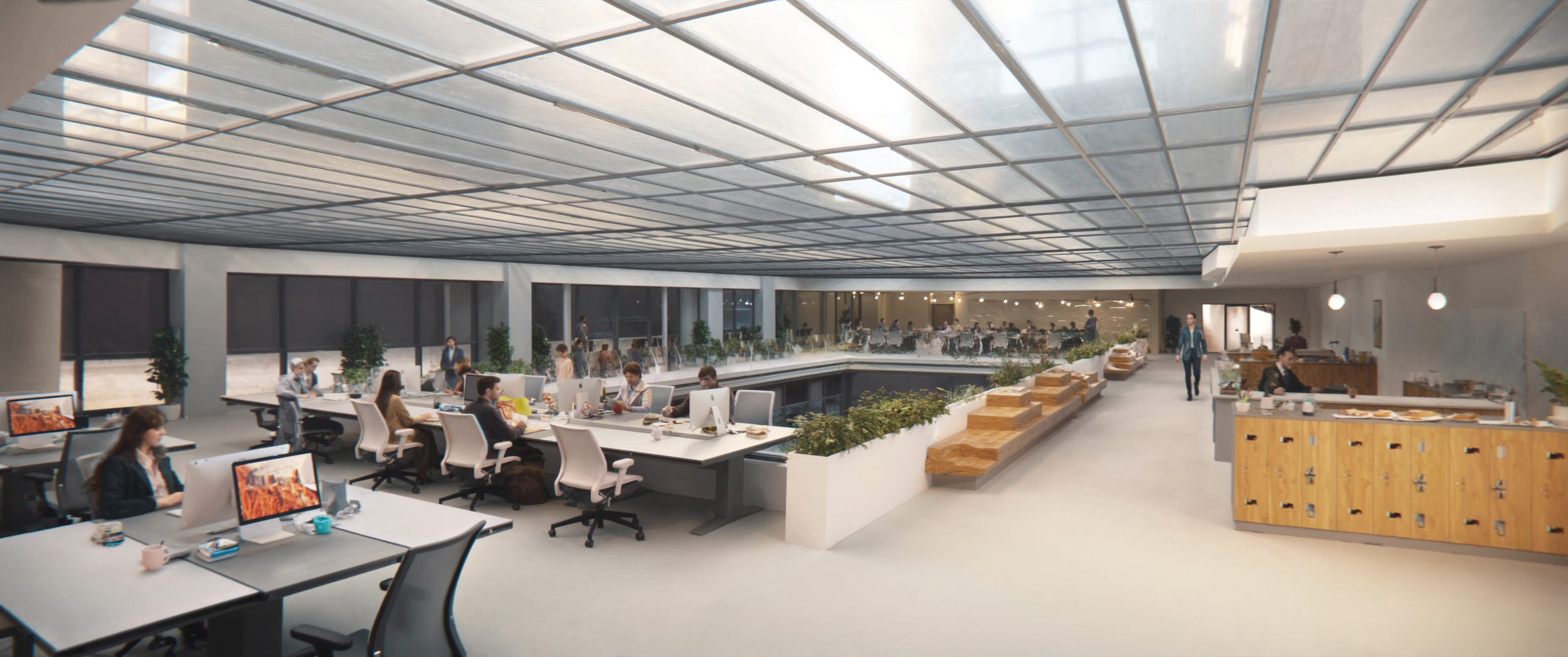
For years, daylighting in India has been argued almost entirely on energy terms — LEED and GRIHA credits, reduced lighting load, lower HVAC demand. Those arguments are real and worth making (we've covered them in our LEED/GRIHA guide). But a second, distinct case for daylighting is becoming increasingly relevant to Indian corporate and institutional projects: the WELL Building Standard, and the broader shift toward treating daylight as a measurable dimension of occupant health rather than just a building energy input.
This post is for architects and developers who are starting to see WELL, or wellness-oriented briefs more broadly, show up in RFPs for corporate campuses, IT parks, and institutional buildings — and want to understand what that means for how a roof or façade gets specified.
Why Daylight Is Treated Differently Under WELL Than Under LEED/GRIHA
LEED and GRIHA evaluate a building primarily through the lens of resource efficiency — energy consumed, water used, materials sourced. Daylighting earns credit there because it reduces electric lighting load and associated cooling.
WELL approaches the same physical daylight through a different lens entirely: occupant experience and health outcomes. Under WELL's Light concept, daylight is assessed for things energy-focused certifications don't typically measure directly — the amount of daylight actually reaching regularly occupied desks and workstations (not just the building envelope on paper), glare control at the eye level of a seated occupant, and consistency of light exposure through the working day.
The practical result: a roof or façade that scores well on an energy-based daylighting metric can still score poorly on a wellness-based one, if the daylight it lets in is concentrated, glare-prone, or poorly distributed across the actual desks people sit at. The two frameworks are complementary, not interchangeable — a project chasing both needs to design for both.
Why This Is Showing Up in Briefs Now
Two trends are pushing wellness-oriented daylighting into the mainstream of Indian commercial specification:
- Talent competition in IT/ITES and corporate campuses. Employers increasingly treat workplace quality — daylight, air quality, biophilic design — as a retention and recruitment lever, not just a compliance checkbox.
- A growing body of research connecting daylight exposure to alertness, mood, and sleep quality via its effect on circadian rhythm. Architects don't need to overstate this evidence to use it responsibly — the direction of the research is consistent enough that daylight access is now routinely treated as a legitimate workplace design input, not a soft or optional one.
The result is that "how much daylight reaches the desks" is becoming a brief requirement in its own right on some projects, separate from whatever a project's energy code or green rating requires.
What This Means for Specification
Distribution over quantity
A wellness brief cares about daylight reaching the actual desks people occupy — not just an average daylight factor across the floor plate. This tends to favour distributed rooflight or clerestory strategies over a single large atrium skylight that only benefits desks directly beneath it. See our guide to selecting a system for a daylighting brief for how we approach this trade-off.
Glare control is not optional
Occupant comfort scoring penalises glare at eye level directly — a bright but glary space does not read as a wellness win. Diffusing polycarbonate systems (multiwall and multicell profiles, in particular) that scatter incoming light rather than transmitting it as a direct beam are generally the safer specification for occupied desk space than clear, high-LT sheet. Our glare guide covers why more light transmission isn't automatically better light.
Consistent daylight through the working day
Circadian-relevant benefit depends on reasonably consistent daylight exposure across the working day, not a single bright burst at midday followed by a dim afternoon. This favours roof and façade orientations and rooflight distributions that are modelled across a full day, not just a single snapshot condition — reinforcing why simulation matters more for these briefs than a rule-of-thumb rooflight percentage.
Views, not just light
Wellness frameworks also value visual connection to the outdoors, separate from daylight quantity. Where a project brief includes this, façade glazing and clerestory strategies using clear or lightly tinted polycarbonate can contribute to both requirements at once — daylight and outdoor view — where a fully diffused rooflight-only strategy would satisfy daylight targets but not the view requirement.
A Practical Starting Point
If a wellness certification or wellness-oriented brief is on the table, the specification conversation needs to start earlier and involve daylight simulation earlier than it would on a purely energy-driven project — because the metrics being scored (desk-level daylight, glare at eye level, consistency through the day) can't be estimated with a rule-of-thumb rooflight percentage the way a basic energy compliance daylighting scheme sometimes can. Bring the daylighting consultant in during concept design, not after the roof geometry is fixed.
Coxwell's diffusing and clear system ranges — Multicell, Prism, Snapwall, and Vivid — cover the distribution and glare-control needs of wellness-oriented commercial daylighting briefs. Speak to our technical team about a specific project brief.
Frequently asked questions
What is the WELL Building Standard's approach to daylighting?
WELL evaluates daylight through its Light concept, focused on occupant experience — how much daylight reaches regularly occupied desks and workstations, glare control at eye level, and consistency of light exposure through the working day — rather than the energy-efficiency lens LEED and GRIHA use.
Is WELL certification the same as LEED or GRIHA for daylighting?
No. LEED and GRIHA credit daylighting primarily for its energy savings. WELL credits daylighting for its effect on occupant health and comfort. A building can perform well on one framework and poorly on the other if daylight is not both energy-efficient and well distributed with good glare control.
Which polycarbonate systems work best for wellness-focused office daylighting?
Diffusing profiles such as multiwall and multicell polycarbonate generally suit occupied desk space better than clear, high-light-transmission sheet, because they scatter light rather than transmitting a direct glare-prone beam — an important factor in occupant comfort scoring under wellness frameworks.
Why does daylight distribution matter more than total daylight quantity for workplace wellness?
Wellness scoring looks at daylight actually reaching occupied desks, not an average across the whole floor. A single large atrium skylight can deliver a good average daylight factor while leaving most desks with little benefit — distributed rooflight or clerestory strategies generally perform better against this kind of scoring.
Next step
Speak to a Coxwell engineer.
Our team can help you specify the right system, review your BOQ, or answer technical questions about your project.