
Polycarbonate Skylights: The Complete Specification Guide for Architects and Builders in India
A polycarbonate skylight transforms a space with natural light — or leaks and overheats it if specified incorrectly. This guide covers every decision architects and builders need to get right, from panel thickness to waterproofing details.
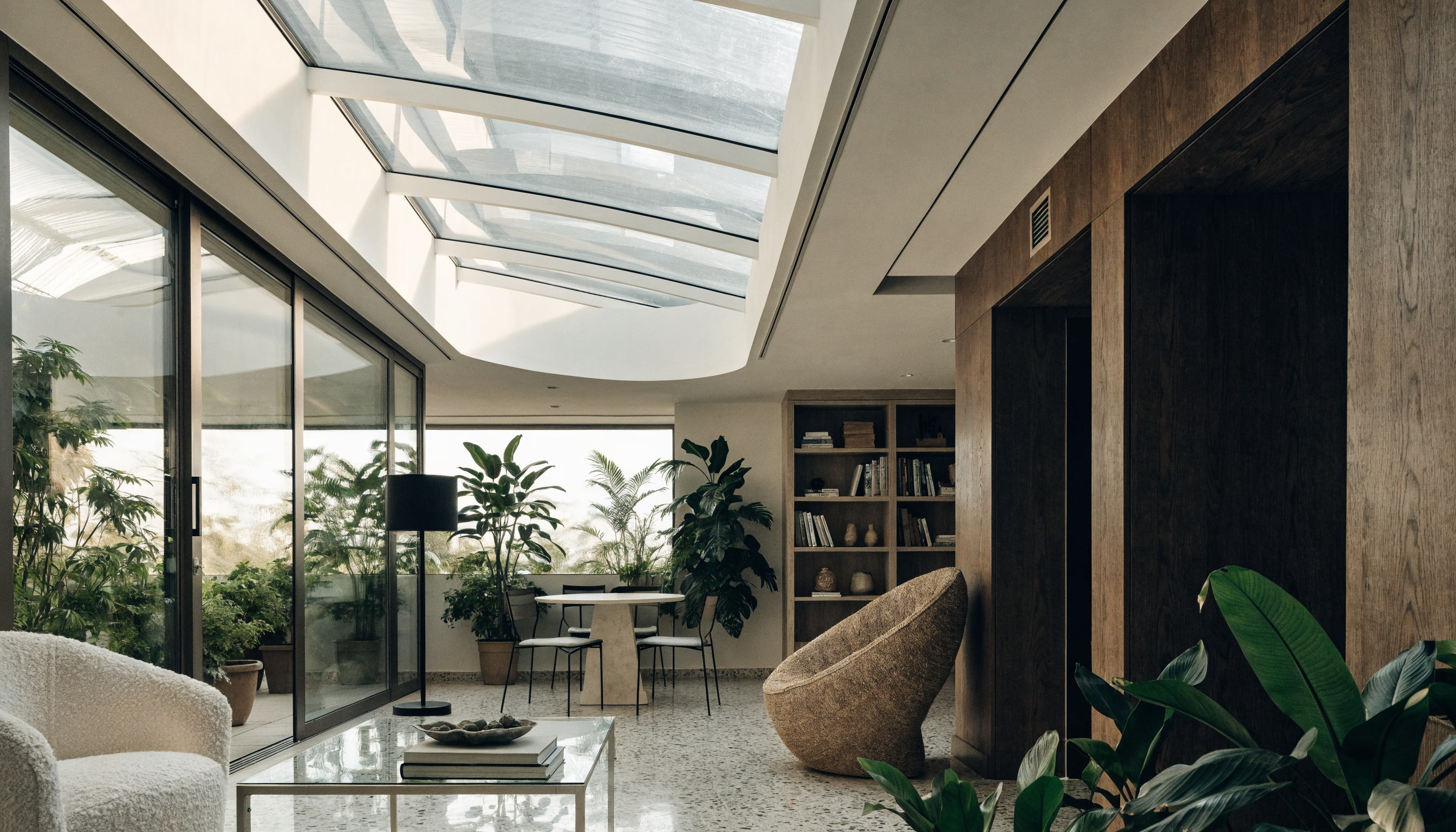
A polycarbonate skylight is one of the highest-value interventions an architect or builder can make to an Indian building. Done correctly, it fills a space with soft, diffused natural light, reduces electricity consumption, and transforms the experience of being in a room — without the weight, cost, or thermal risk of traditional glass.
Done incorrectly, it leaks, overheats the space below, yellows within five years, and becomes a permanent maintenance problem.
This guide covers the specification decisions that determine which outcome you get: panel selection, thermal performance, waterproofing details, and the application-specific considerations that change the answer for residential versus commercial projects.
Why Polycarbonate Instead of Glass?
The comparison with glass is the first question most architects ask. Glass offers higher optical clarity and a premium appearance. Polycarbonate offers significant practical advantages for roofing applications specifically:
- Weight: Polycarbonate weighs 1.2–3.5 kg/m² versus 8–25 kg/m² for equivalent glass. On a roof, this means lighter secondary structure, simpler installation, and reduced dead load on the primary frame.
- Impact resistance: Polycarbonate is 250 times more impact resistant than glass of equivalent thickness. Hail, falling debris, and accidental access are managed without shattering.
- Thermal insulation: A 16mm twin-wall polycarbonate panel offers a U-value of approximately 1.7 W/m²K — better than most single-glazed glass options and comparable to basic double-glazed units, without the frame complexity of a full glazing system.
- Light diffusion: Most polycarbonate profiles scatter incident light, reducing glare compared to clear glass. For office, retail, and residential applications, this diffused quality is often preferable to the harder direct sunlight that clear glass admits.
Where glass outperforms polycarbonate: vertical glazing requiring optical clarity, premium architectural applications where appearance justifies the premium, and spans where glass-specific structural systems (curtain wall, point-fix) are already designed in.
Choosing the Right Panel Thickness
Panel thickness governs thermal performance and structural capacity. The selection matrix for Indian applications:
| Application | Recommended Thickness | U-Value (approx.) |
|---|---|---|
| Residential pergola or patio (unconditioned) | 6mm twin-wall | 3.3 W/m²K |
| Residential rooflight or sunroom (unconditioned) | 10–16mm twin-wall | 1.9–2.6 W/m²K |
| Air-conditioned residential space | 16–25mm multi-wall | 1.1–1.7 W/m²K |
| Commercial atrium or lobby (unconditioned) | 16mm twin-wall minimum | 1.7 W/m²K |
| Air-conditioned commercial space | 25–40mm multi-wall | 0.99–1.4 W/m²K |
| Industrial daylighting strip | 6–10mm corrugated or twin-wall | 2.6–3.3 W/m²K |
The rule of thumb: for any air-conditioned space in India, specify a minimum of 16mm multiwall. The incremental cost over thinner panels is modest; the thermal savings over 20 years are significant.
Light Transmission: Clear, Opal, or Bronze?
Three finishes dominate skylight applications in India:
Clear
85–88% light transmission. Closest to glass in appearance. Best for spaces requiring maximum light levels — north-oriented residential rooflights, cold-store areas, and spaces where occupants want a view of the sky. Risk: glare in direct-sun orientations and noticeable solar heat gain even through multiwall panels.
Opal (Diffused White)
40–60% light transmission. Scatters light evenly, eliminating hotspots and hard shadows. Best for offices, retail spaces, classrooms, and residential living areas. Produces the most comfortable daylit environment for human occupancy. This is the most-specified finish in Coxwell's commercial and residential projects.
Bronze or Tinted
25–45% light transmission depending on depth of tint. Reduces solar heat gain and manages glare. Best for south-facing orientations, atria in very hot climates, and spaces where solar gain control is the primary constraint. The trade-off is a cooler, slightly darker quality of light compared to clear or opal.
The Waterproofing Detail Is the Critical Variable
Most polycarbonate skylight failures in India are waterproofing failures, not material failures. The panel itself may last 20 years; a poorly designed flashing detail may fail in the first monsoon.
The key waterproofing principles for polycarbonate skylight installation:
- Never sealant-dependent: Sealants degrade, harden, and crack within 5–10 years in Indian temperature cycles. A skylight system that depends on sealants for water exclusion is a maintenance liability. Specify systems with mechanical water shedding — proper overlaps, dry-fit interlocking, and engineered ridge and eaves caps.
- Thermal expansion allowance: Polycarbonate expands and contracts significantly with temperature — 6–8 times more than steel. Fixings must allow for thermal movement; oversized or over-tightened fixings crack panels and open gaps. Use manufacturer-specified washers and torque limits.
- Minimum pitch: Most polycarbonate roofing systems require a minimum roof pitch of 5° to ensure water runoff. Flat or near-flat installations require dedicated flat-roof skylight systems with engineered sealed perimeter frames and different flashing details.
- Purlin spacing: Correct purlin spacing prevents panel deflection under wind and water load, which can create ponding and reverse-flow leakage. Follow manufacturer span tables for the specific panel and load condition.
Condensation Management
In conditioned spaces, the temperature differential between the interior and a cold panel surface can cause condensation — water forming on the inside face of the panel and dripping to the floor. This is a common complaint in poorly designed cold-store skylights and residential sunrooms.
Mitigation strategies:
- Specify panel thickness appropriate for the thermal differential (lower U-value reduces condensation risk)
- Ensure adequate ventilation in the roof void
- In cold-chain applications, use condensation-control channel profiles that capture and drain internal water runoff
Specification Checklist for Architects
Before specifying a polycarbonate skylight, confirm the following are documented in the project spec:
- Panel thickness and U-value target
- Light transmission percentage and finish (clear / opal / bronze)
- UV stabilisation — co-extruded, not surface-coated
- Roof pitch and minimum clearance from structure
- Purlin spacing and secondary structure specification
- Flashing system and thermal expansion accommodation method
- Manufacturer warranty — minimum 10 years on transparency and weathertightness
Coxwell provides complete architectural specifications, CAD details, and BOQ templates for all skylight systems — formatted for direct inclusion in project documents. Contact the technical team to request specification documents for your project.
Request skylight specification documents →
Related reading: U-Value vs Light Transmission vs Lux → | Leak-proof polycarbonate roofing details → | Multiwall polycarbonate panels →
Frequently asked questions
What thickness polycarbonate should I use for a residential skylight?
For unconditioned residential spaces such as pergolas and patios, 6–10mm twin-wall is adequate. For air-conditioned living spaces or sunrooms, specify 16–25mm multiwall for sufficient thermal insulation. The extra cost of thicker panels is typically recovered through reduced AC running costs within a few years.
Do polycarbonate skylights leak?
Correctly installed polycarbonate skylights with proper flashing details do not leak. Most skylight leaks are caused by improper installation — incorrect pitch, sealant-dependent details, or inadequate thermal expansion allowance. Specify a system with mechanical waterproofing details and follow manufacturer installation guidelines closely.
How often do polycarbonate skylights need maintenance?
Polycarbonate skylights require minimal maintenance — typically an annual clean with mild soap and water to maintain light transmission and appearance. Avoid abrasive cleaners or solvents. Check flashing and fixings every 3–5 years. A quality system installed correctly requires no significant maintenance for 15–20 years.
Next step
Speak to a Coxwell engineer.
Our team can help you specify the right system, review your BOQ, or answer technical questions about your project.