
Polycarbonate Roofing for Home Pergolas, Carports & Patios: The Complete India Buying Guide
Confused about polycarbonate sheet options for your pergola, carport, or patio roof? Here's what to buy, what it costs in India, and the mistakes that ruin a home installation.
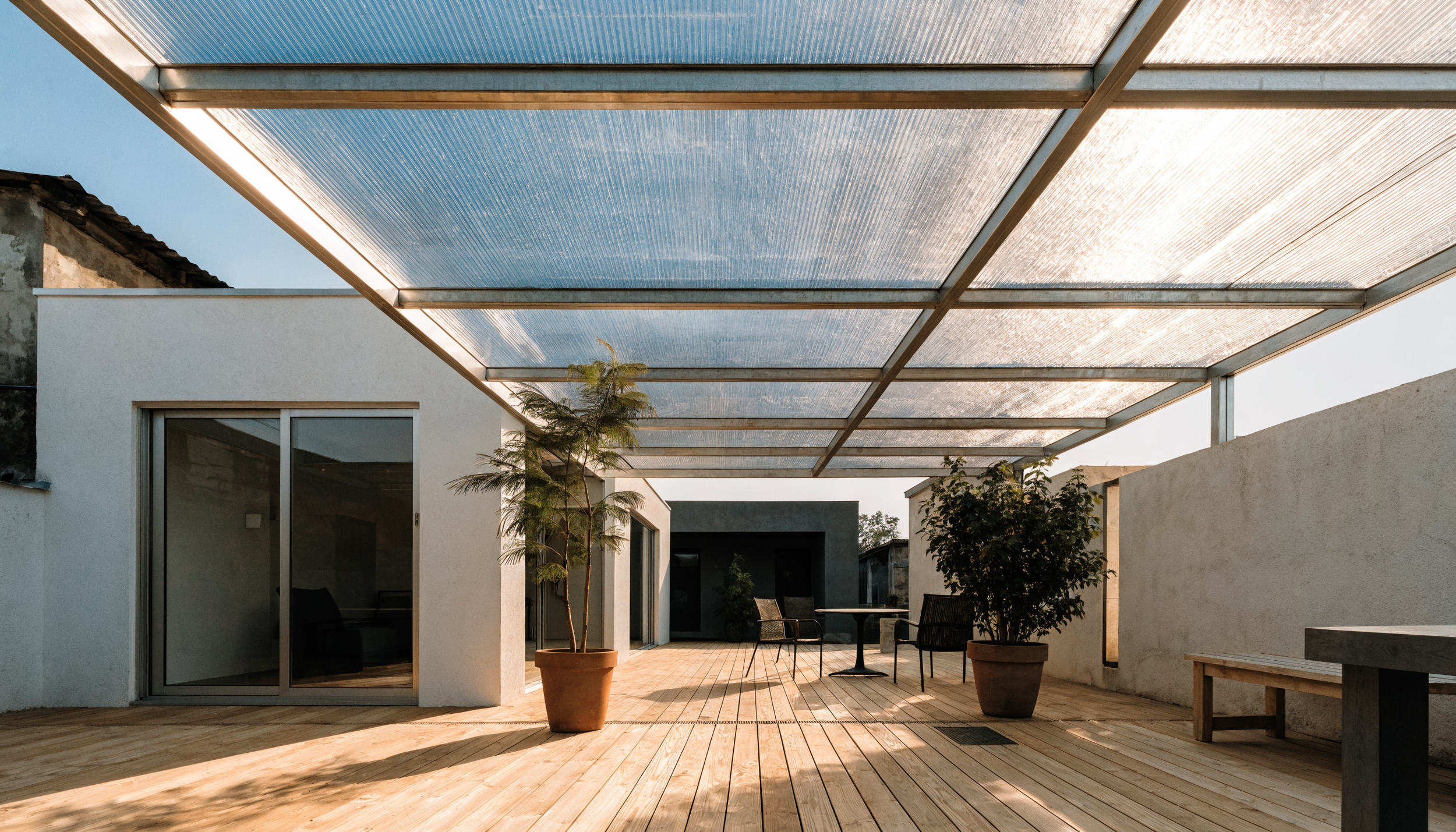
If you've searched "polycarbonate roofing for home" or "pergola roof material India," you've probably landed on ten different vendor pages quoting ten different prices for what looks like the same sheet. That's the actual problem homeowners face — not whether polycarbonate is a good idea (it usually is), but figuring out which product, thickness, and tint actually fits a pergola, carport, or patio, and what a fair price looks like before you call a fabricator.
This guide is written for that decision — not for architects specifying a 5,000 sqm industrial roof, but for someone covering a 200–400 sqft carport, deck, or courtyard at home.
Why Homeowners Are Choosing Polycarbonate Over Tin, Asbestos, and Glass
For decades, the default home roofing options in India were galvanised tin sheet, asbestos cement sheet, or — for anyone who could afford it — toughened glass. Polycarbonate has become the practical middle ground, and the reasons are specific, not just aesthetic.
| Factor | Tin Sheet | Asbestos Sheet | Glass | Polycarbonate |
|---|---|---|---|---|
| Natural light | None (opaque) | None (opaque) | Excellent | Excellent, with diffusion options |
| Heat under roof | Very high (radiant heat) | High | High unless treated | Low to moderate (tint/thickness dependent) |
| Rain noise | Loud | Moderate | Low | Low to moderate |
| Weight / structure needed | Light | Heavy, brittle | Very heavy | Light — 1/6th the weight of glass |
| Impact resistance | Dents | Cracks, brittle | Shatters | Up to 250x glass, won't shatter |
| Typical residential lifespan | 10–15 yrs (rust risk) | 15–20 yrs (health concerns) | 20+ yrs (costly) | 15–20+ yrs with co-extruded UV protection |
The reason polycarbonate specifically wins for pergolas, carports, and patio covers is that it's the only option on this list that gives you daylight and weather protection and low structural load, without the cost or fragility of glass. That combination is exactly what a home outdoor space needs — enough light to keep the area from feeling like a cave, enough heat control to actually use it at midday, and a roof that survives a decade of Indian summers and monsoons without yellowing or cracking.
What You'll Actually Pay: Polycarbonate Roofing Cost for Homes in India
Pricing confusion is the single biggest reason homeowners either overpay or end up with a roof that fails in three years. Here's the realistic breakdown by product type, based on current Indian market ranges:
| Product Type | Typical Use | Price Range (₹/sqft, material only) |
|---|---|---|
| Corrugated PC sheet | Basic shed roofing, budget carports | ₹30–50 |
| Twin wall / multiwall (6–10mm) | Greenhouses, small pergolas, low-traffic covers | ₹70–110 |
| Multiwall / standing seam (12–16mm) | Pergolas, walkways, larger carports | ₹110–170 |
| Solid polycarbonate (2–12mm) | Carport canopies, feature roofs, partitions | ₹150–250+ |
Two things this table won't tell you, but matter more than the number itself:
- Material price is not installed price. Add the aluminium or PVC glazing bar system, end closures, fasteners, and labour — for a typical home pergola or carport, expect installed cost to run 30–60% above material cost alone.
- The cheapest sheet in each category is rarely the one with real UV protection. A ₹35/sqft corrugated sheet with no co-extruded UV layer can visibly yellow within two to three Indian summers. The same false economy we've written about for commercial projects applies just as much to a home pergola — replacing a yellowed, brittle pergola cover after three years costs far more than paying slightly more upfront.
For a full price-by-system breakdown, see our polycarbonate pricing guide.
Choosing the Right Product for Your Application
Carports
A carport roof takes direct sun for years without the benefit of a diffusing canopy of trees, and it needs to look clean from the street. Solid polycarbonate sheet (clear or bronze-tinted) is the usual recommendation — it gives a glass-like finished appearance, resists scratching well when a quality grade is used, and carries UV protection on both faces since the underside is just as exposed as the top in an open carport structure.
Pergolas and Covered Walkways
This is where diffusion matters most. A clear sheet over a pergola creates harsh, moving patches of direct sun through the day — pleasant for ten minutes, uncomfortable for an afternoon. A multiwall panel in an opal or diffused tint spreads the light evenly, cutting glare while still keeping the space visibly bright. 10–16mm multiwall is the standard specification for residential pergolas and covered walkways.
Greenhouses and Garden Structures
Twin wall sheet in clear or opal tint is the standard here — plants need diffused light, not direct sun concentrated through a single clear pane, and the air gap in a twin wall panel gives a useful thermal buffer for cooler nights.
Coxwell's residential product range covers all three of these with tint and thickness options matched to each use case — worth a look before you brief a local fabricator on specs.
Thickness and Tint: The Heat Question Everyone Actually Cares About
The number one complaint about badly specified polycarbonate roofs isn't leaks — it's heat. A clear, thin sheet in direct Indian sun can turn a pergola into a greenhouse in the worst sense. Two variables control this:
- Thickness: Thicker multiwall panels (12–16mm vs 6–8mm) have more internal air cells, which insulate against heat transfer. For most home applications, 10mm is the practical minimum and 16mm is worth the extra cost if the space is used at midday. Our 12mm vs 16mm comparison breaks this down in more depth.
- Tint and diffusion: Bronze, opal, and grey tints reduce both glare and solar heat gain compared to clear sheet, at some cost to raw light transmission. For a seating or dining pergola, this trade-off is almost always worth it. See our guide on choosing colours to reduce heat while keeping natural light for a tint-by-tint comparison.
Five Mistakes Homeowners Make When Buying Polycarbonate Roofing
- Buying on price per square foot alone. A cheap sheet with no test certificate or UV declaration is not the same product as a co-extruded, tested panel — even if they look identical in the shop.
- Skipping the UV protection question entirely. Ask specifically whether the UV layer is co-extruded (permanent, cannot peel) or a surface coating (wears off within a few years). Our UV ageing guide explains exactly what to ask a supplier.
- Choosing clear sheet everywhere for "maximum light." More light isn't always better — a diffused or lightly tinted sheet is usually more comfortable for a space people actually sit in.
- Ignoring slope and drainage. Polycarbonate roofing needs a minimum 5–7° slope to drain properly. A flat or near-flat pergola cover will pool water and eventually leak at the joints, regardless of sheet quality.
- Letting the fabricator skip proper end closures. Open sheet ends collect dust and water inside the panel cells over time, leaving permanent dark streaks. Insist on aluminium U-profile and tape at every cut end, exactly as required on a commercial installation.
How Long Should It Last?
A correctly specified polycarbonate roof — co-extruded UV protection, proper thickness for the span, correct slope, and sealed end closures — should perform for 15 to 20 years with essentially no maintenance beyond an occasional wash with mild soap and water. If a residential installation starts yellowing, hazing, or leaking within the first 3–5 years, the cause is almost always one of two things: a coated (not co-extruded) UV layer, or a detailing mistake at the ends and joints. Both are avoidable at the specification stage — which is the entire point of reading a guide like this before you order material.
Coxwell manufactures the same co-extruded, tested polycarbonate systems used on Indian airports and railway stations, sized and priced for home carports, pergolas, and patios. Visit our residential page or get a quote for your project — we typically respond with a specification and price within 48 hours.
Frequently asked questions
How much does polycarbonate roofing cost for a home pergola or carport in India?
Material costs range from about ₹30–50/sqft for basic corrugated sheet to ₹150–250+/sqft for solid polycarbonate. Multiwall panels suited to most pergolas and carports typically run ₹70–170/sqft. Installed cost (including fixing hardware and labour) is usually 30–60% above material cost alone.
What thickness of polycarbonate sheet is best for a home pergola roof?
10mm to 16mm multiwall polycarbonate is the standard specification for residential pergolas and covered walkways. Thinner 6–8mm sheet is acceptable for greenhouses and low-traffic covers but performs poorly on heat control for spaces used at midday.
Is polycarbonate roofing better than tin sheet for a carport?
For most homeowners, yes. Polycarbonate transmits daylight (tin doesn't), runs cooler under direct sun when properly tinted, weighs a fraction of an equivalent tin or metal roof, and won't rust. Tin remains cheaper upfront and is louder in rain, while a quality polycarbonate system with co-extruded UV protection lasts 15-20+ years without rusting or needing repainting.
Does polycarbonate roofing turn yellow over time?
Only if it lacks proper UV protection. Sheets with a co-extruded UV layer (built into the material during manufacturing) resist yellowing for 15-20+ years. Cheaper sheets with a surface-applied UV coating can visibly yellow and haze within 2-3 years in Indian sun. Always ask your supplier whether UV protection is co-extruded or coated before buying.
Next step
Speak to a Coxwell engineer.
Our team can help you specify the right system, review your BOQ, or answer technical questions about your project.