
Retrofitting Skylights: How to Add Polycarbonate Rooflights to an Existing Metal Roof
Adding daylighting to a factory or warehouse that's already built is a different job from a new-build rooflight installation. Here's what changes — and what fails if you skip it.
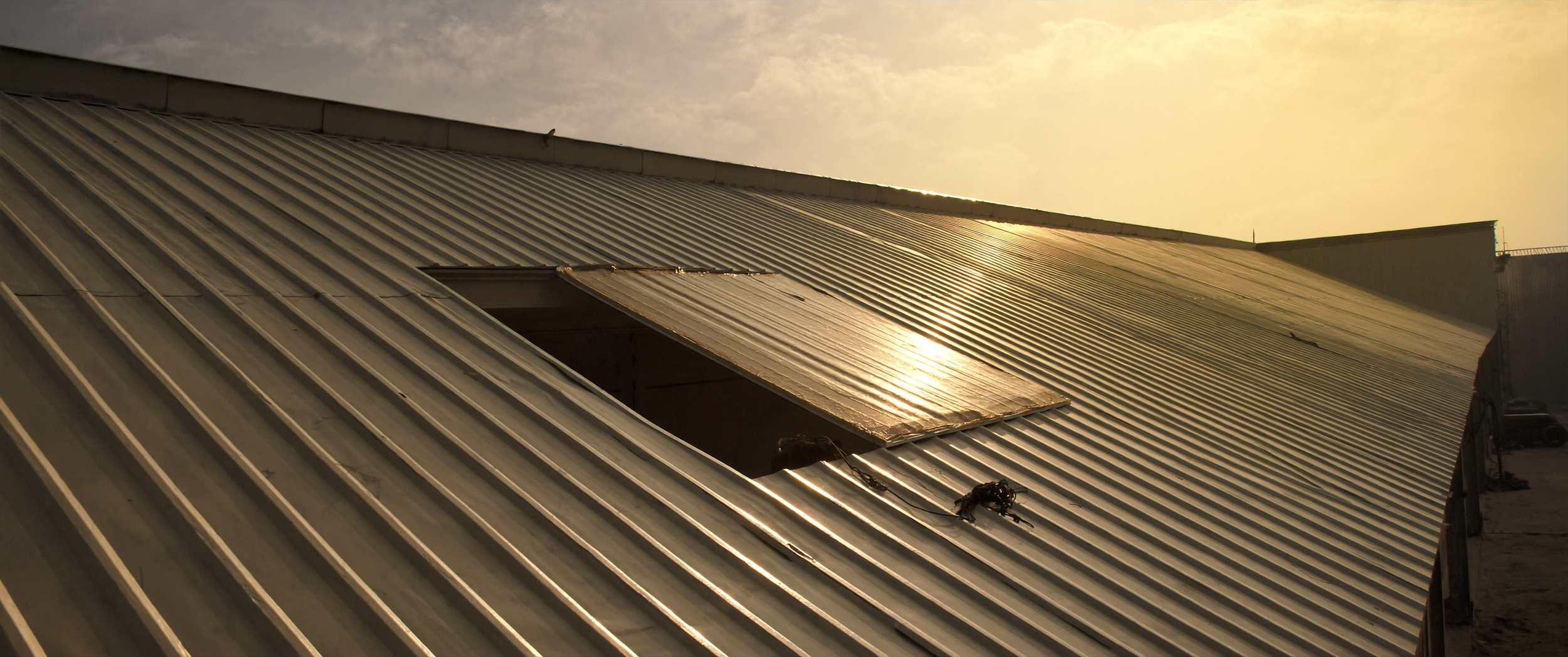
Most daylighting content — including a lot of our own — assumes you're specifying a roof from scratch. But a large share of the polycarbonate rooflight enquiries we get come from a different starting point entirely: an existing factory, warehouse, or shed with a fully opaque metal roof, whose owner has just realised how much they're spending on daytime lighting and wants to retrofit rooflights into a roof that's already up.
Retrofitting is a genuinely different job from new-build rooflight installation — not harder, necessarily, but different in the details that matter. Here's what changes.
The Two Retrofit Approaches
1. Sheet-for-sheet replacement
The most common and usually most cost-effective retrofit method: remove selected full-length metal roof sheets and replace them with polycarbonate sheets of matching profile — same rib pitch, same corrugation depth, same fixing centres. This preserves the existing roof's weatherproofing logic exactly, because the new panel occupies the same geometric role the old one did.
This only works if a matching profile is available. Corrugated and trapezoidal polycarbonate profiles are manufactured to match common Indian metal roofing profiles precisely for this reason — always confirm profile match before ordering, since a near-match that's off by even a few millimetres in pitch will not seal correctly at the overlaps.
2. Curb-mounted skylight units
Where a full sheet swap isn't practical — standing seam metal roofs, insulated sandwich panel roofs, or roofs where only a small opening is wanted — a curb-mounted rooflight unit is fixed over a cut opening in the existing roof, with a raised upstand (curb) built up around the opening to keep water from tracking in. This method is more involved structurally but doesn't depend on matching an old sheet profile.
What's Actually Different About a Retrofit
Thermal movement between old and new materials
Polycarbonate has a significantly higher coefficient of thermal expansion than steel — it moves more, over a wider range, with daily and seasonal temperature swings. On a new-build roof, fixing details are designed around this from day one. On a retrofit, the existing metal roof's fixing centres and lap details were designed only for steel's much smaller movement. Fixing holes for the new polycarbonate panel need to be oversized and use load-bearing washers, not fixed rigidly, exactly as required on new installations — but retrofit crews unfamiliar with polycarbonate sometimes copy the metal roof's original fixing pattern exactly, which cracks the new panel within a season or two.
Structural check before cutting anything
Existing purlin spacing was designed for the dead load and span capability of the original metal sheet. Most polycarbonate rooflight profiles are lighter than the metal they replace, which is favourable — but always verify actual purlin spacing against the new panel's rated span before proceeding. On older buildings, purlin spacing is sometimes wider than current polycarbonate span tables allow, in which case additional intermediate support (a sub-purlin or batten) needs to go in before the new panel is fixed.
Waterproofing at the interface
The single highest-risk detail in any retrofit is the junction between old and new material — where the new polycarbonate sheet's end laps and side laps meet the surrounding metal roof. Every cut edge of the existing metal sheet adjacent to the new panel needs to be checked for damage from the retrofit work itself (cutting, drilling, foot traffic) and resealed as part of the job, not left as-is on the assumption that it was fine before.
Working live over an occupied building
New-build roofs go up before the building underneath is in use. Retrofits almost always happen over a live factory floor, with production continuing below. This changes the practical sequencing of the job — smaller sections at a time, temporary weather protection between work sessions, and coordination with whoever is running the floor below to avoid water or debris falling onto stock or machinery mid-installation.
A Realistic Retrofit Process
- Survey the existing roof — profile, pitch, purlin spacing, sheet condition, and access.
- Confirm panel match or curb design based on the survey — profile-matched sheet or curb-mounted unit.
- Check structural span against the chosen panel's rated capacity; add sub-purlins if the existing spacing is too wide.
- Sequence the work in manageable sections with temporary weatherproofing between sessions, coordinated with site operations below.
- Fix with movement allowance — oversized holes, correct washers, no rigid fixing through the panel face.
- Reseal every disturbed junction between old and new material, not just the new panel's own laps.
Is Retrofitting Worth It?
For most factories and warehouses currently running fluorescent or LED lighting through the working day under a fully opaque roof, yes — the payback is usually driven by lighting energy savings alone, before counting the softer benefits of natural light on a factory floor. Our warehouse energy savings post walks through how that saving is typically calculated. The retrofit cost premium over a fresh sheet-for-sheet metal replacement is usually modest; the real cost risk in a retrofit project is not the material, but a crew that treats it like a standard metal roof repair and skips the polycarbonate-specific fixing and sealing details above.
Coxwell supplies profile-matched polycarbonate rooflight sheet for retrofit projects across common Indian roofing profiles, along with technical guidance on fixing details for existing structures. Talk to our team with your existing roof profile and photos, and we'll confirm what's possible before you commit to a layout.
Frequently asked questions
Can polycarbonate rooflights be added to an existing metal roof?
Yes. The two common methods are replacing selected metal sheets with profile-matched polycarbonate sheets of the same rib pitch and corrugation, or fixing a curb-mounted skylight unit over a cut opening — the right choice depends on the existing roof profile and how much daylight area is wanted.
Does retrofitting rooflights require checking the existing roof structure?
Yes. Purlin spacing on an existing building was designed around the original metal sheet's span capability. Always verify the new polycarbonate panel's rated span against actual purlin spacing before cutting into the roof — older buildings sometimes need an added sub-purlin.
Why do retrofit skylights fail more often than new-build ones?
Most retrofit failures come from crews copying the original metal roof's rigid fixing pattern, which doesn't allow for polycarbonate's greater thermal expansion, or from not resealing the surrounding metal sheet edges disturbed during the retrofit work — not from the polycarbonate panel itself.
Is it worth retrofitting daylighting into an existing factory roof?
For most buildings currently relying on daytime artificial lighting under a fully opaque roof, yes — the lighting energy savings alone usually justify the retrofit cost within a reasonable payback period, before counting the benefit of natural light on the factory floor.
Next step
Speak to a Coxwell engineer.
Our team can help you specify the right system, review your BOQ, or answer technical questions about your project.