
How Daylighting with Polycarbonate Cuts Energy Bills in Indian Warehouses and Factories
Lighting accounts for 30–45% of electricity consumption in the average Indian warehouse. Polycarbonate daylighting systems cut that by 40–70% and pay back in under four years. Here is how to get the spec right.
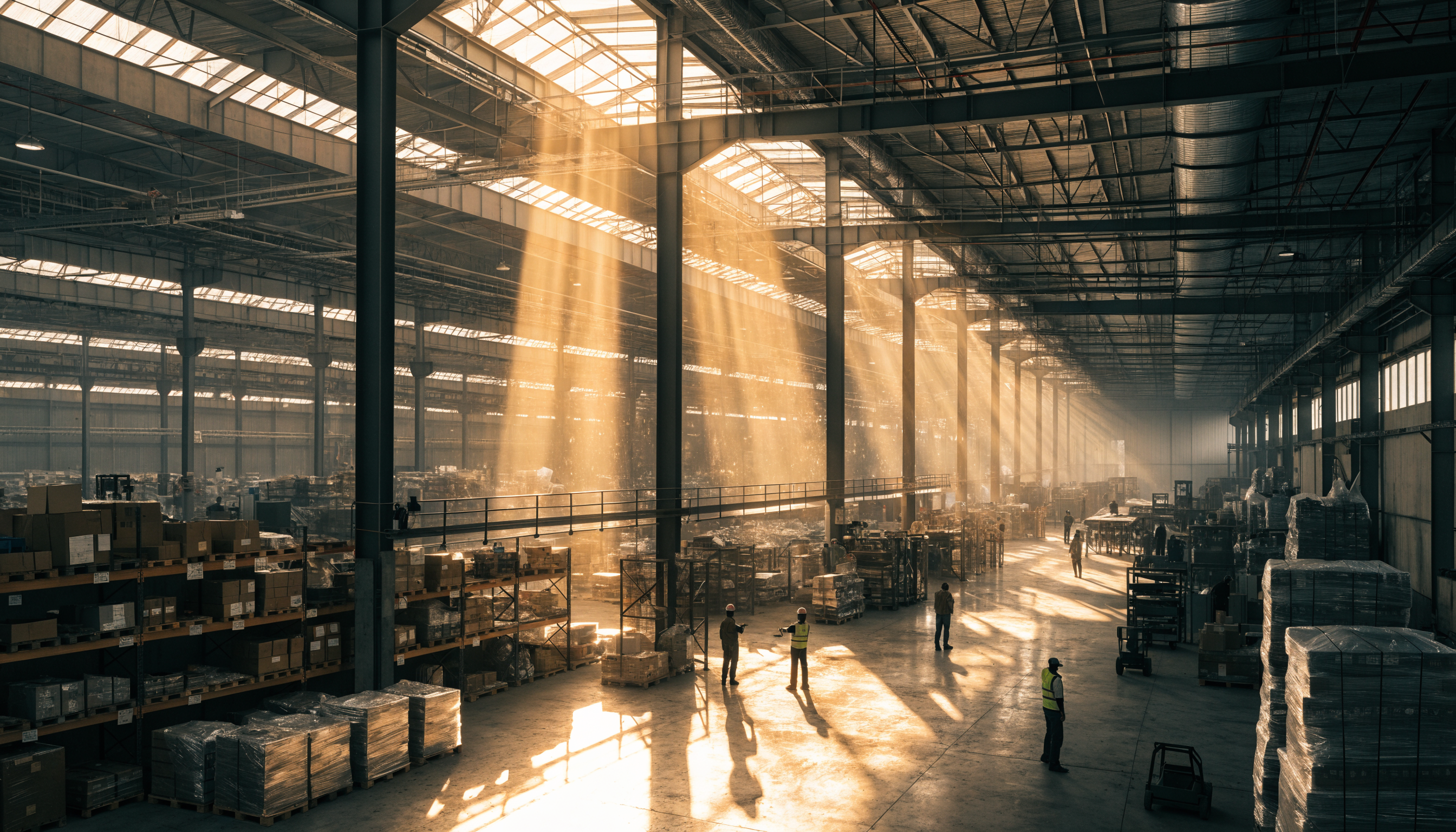
Lighting accounts for 30–45% of electricity consumption in the average Indian warehouse or factory. For a 10,000 m² facility running regular daytime hours, that can mean ₹15–25 lakh per year in electricity — and much of it is consumed during daylight hours when the sun outside is already providing more than enough light to work by.
Polycarbonate daylighting — the practice of incorporating translucent roofing panels into an industrial building's roof — directly attacks that cost. Done well, it reduces artificial lighting energy use by 40–70% and pays for itself in under four years. Done poorly, it creates glare, heat, and leaks. This post explains how to do it well.
What Daylighting Actually Means
Daylighting is not about installing transparent panels everywhere. It is about delivering a controlled quantity of natural light to occupied floor areas during working hours — enough to reduce or eliminate the need for artificial lighting, without creating glare, excessive heat gain, or uncomfortable brightness variation.
In a warehouse or factory context, this is typically achieved through daylighting strips: runs of translucent polycarbonate panels integrated into an otherwise opaque roof, positioned to distribute light evenly across the working floor.
The ratio of daylighting area to floor area matters significantly. Industry practice for Indian industrial buildings typically targets:
- 8–15% roof-to-floor ratio for general warehousing and logistics
- 10–20% for light manufacturing, assembly, and quality inspection
- 5–10% for heavy manufacturing where heat output from machinery reduces the value of additional solar gain
The Energy Maths
Here is a representative example: a 6,000 m² single-storey distribution warehouse in Nashik, operating Monday to Saturday, 7am to 7pm.
Without daylighting:
- Lighting load: 8 W/m² (LED fittings), total 48 kW
- Operating hours per year: 3,120 hours (10 hours/day × 312 days)
- Annual lighting energy: 149,760 kWh
- At ₹8/unit: ₹11.98 lakh/year
With 12% daylighting coverage (720 m² of polycarbonate strips):
- Daylight hours offset: 8 hours/day (controls dim artificial lighting when daylighting provides ≥500 lux)
- Artificial lighting reduction: approximately 65%
- Annual lighting energy: approximately 52,000 kWh
- At ₹8/unit: ₹4.16 lakh/year
- Annual saving: ₹7.82 lakh
If the polycarbonate system costs ₹950/m² installed (720 m² × ₹950 = ₹6.84 lakh), simple payback is under 11 months.
This example assumes standard LED lighting already installed. In facilities still running fluorescent or metal halide fixtures, the daylighting savings compound with the lighting upgrade — payback periods of 6–18 months are common.
Choosing the Right Polycarbonate System
Not all polycarbonate panels deliver equivalent daylighting performance. The critical variables are:
Light Transmission
Most daylighting specifications target 40–60% light transmission (LT). Higher LT (70–88%) can create glare problems on workbenches and vehicle screens. Lower LT (20–40%) reduces heat gain but may require supplementary lighting on overcast days. The sweet spot for most Indian warehouses is 50–65% LT with a diffusing finish — opal or lightly tinted — rather than clear.
U-Value
Daylighting panels that admit light also admit solar heat. In Indian climates where summer temperatures regularly exceed 40°C, a panel with poor thermal performance can create a net negative: more light, but much more heat, resulting in higher AC costs that offset lighting savings. Multiwall polycarbonate panels — 6mm twin-wall minimum; 16mm or above for air-conditioned spaces — provide the insulation layer that keeps the energy equation positive.
UV Stability
Panels without co-extruded UV protection yellow and lose transparency within 3–5 years. Yellowing reduces daylighting benefit while retained heat transmission becomes a liability. Always specify panels with co-extruded UV stabilisation on both faces, backed by a minimum 10-year transparency warranty.
System Waterproofing
Daylighting strips must be watertight over decades, not just at installation. The choice of standing-seam system, flashing detail, and purlin spacing is as important as panel selection. Coxwell's Multicell and X-Fix systems are designed specifically for long-span daylighting applications and include engineered flashing details for every ridge, eaves, and valley condition.
Positioning Daylighting Strips for Maximum Effect
Strip position affects both light distribution and heat performance:
- North-facing rooflights deliver consistent, diffuse light with minimal solar heat gain — ideal for precision work environments and air-conditioned spaces.
- East–west ridge strips provide balanced morning and afternoon light distribution for general warehousing.
- South-facing panels maximise winter light input but create high solar heat gain in summer — usually avoided in Indian climates without external shading.
- Even distribution across a long roof plane (strips every 8–12 m) provides better floor-level uniformity than a single concentrated strip.
Additional Benefits Beyond Energy Savings
- Worker productivity and wellbeing: Research consistently shows that workers in naturally lit environments report lower fatigue and higher output — an increasingly important factor for warehouse operators seeking to attract and retain staff.
- Emergency visibility: Daylighting panels continue functioning during power outages, maintaining safe evacuation visibility without battery backup systems.
- Green building certification: IGBC and LEED credits are available for daylighting systems meeting specified lux targets — a growing requirement for institutional and export-focused industrial clients.
- Visual quality inspection: Colour rendering under natural light is superior to fluorescent or sodium-vapour alternatives, making daylighting particularly valuable for food processing, garment manufacturing, and quality inspection areas.
Getting a Daylighting Study for Your Building
Coxwell provides complimentary daylighting studies for qualifying industrial projects — including floor-level lux modelling, energy savings calculations, and panel specification recommendations based on your building geometry and climate zone.
Related reading: U-Value vs Light Transmission vs Lux → | Multicell roofing system → | Industrial roofing applications →
Frequently asked questions
How much of the roof area should be polycarbonate for effective daylighting in a warehouse?
For Indian warehouses and factories, 8–15% of roof area as polycarbonate daylighting panels is the standard recommendation. This ratio delivers 300–500 lux at floor level during daylight hours — sufficient to replace artificial lighting for most warehousing and manufacturing tasks.
Does polycarbonate daylighting work in North India's winters?
Yes. Even in North Indian winters, daylight hours (7am–5pm) provide adequate natural light for a full working shift. Polycarbonate multiwall panels also provide insulation that retains heat in the space below — making them suitable for year-round use in all Indian climates.
What is the payback period for polycarbonate daylighting in warehouses?
For most Indian warehouses, the payback period on a polycarbonate daylighting system is 1–4 years, depending on current lighting type, electricity tariff, and working hours. Facilities replacing old fluorescent or metal halide lighting often see payback within 12–18 months when combining daylighting with LED upgrades.
Next step
Speak to a Coxwell engineer.
Our team can help you specify the right system, review your BOQ, or answer technical questions about your project.