
What Contractors Should Ask Before Accepting a Skylight Job
Before you commit to a polycarbonate skylight installation, there are 12 questions you need answered. Span, slope, drainage, wind load, heat gain, access, and maintenance — all covered.
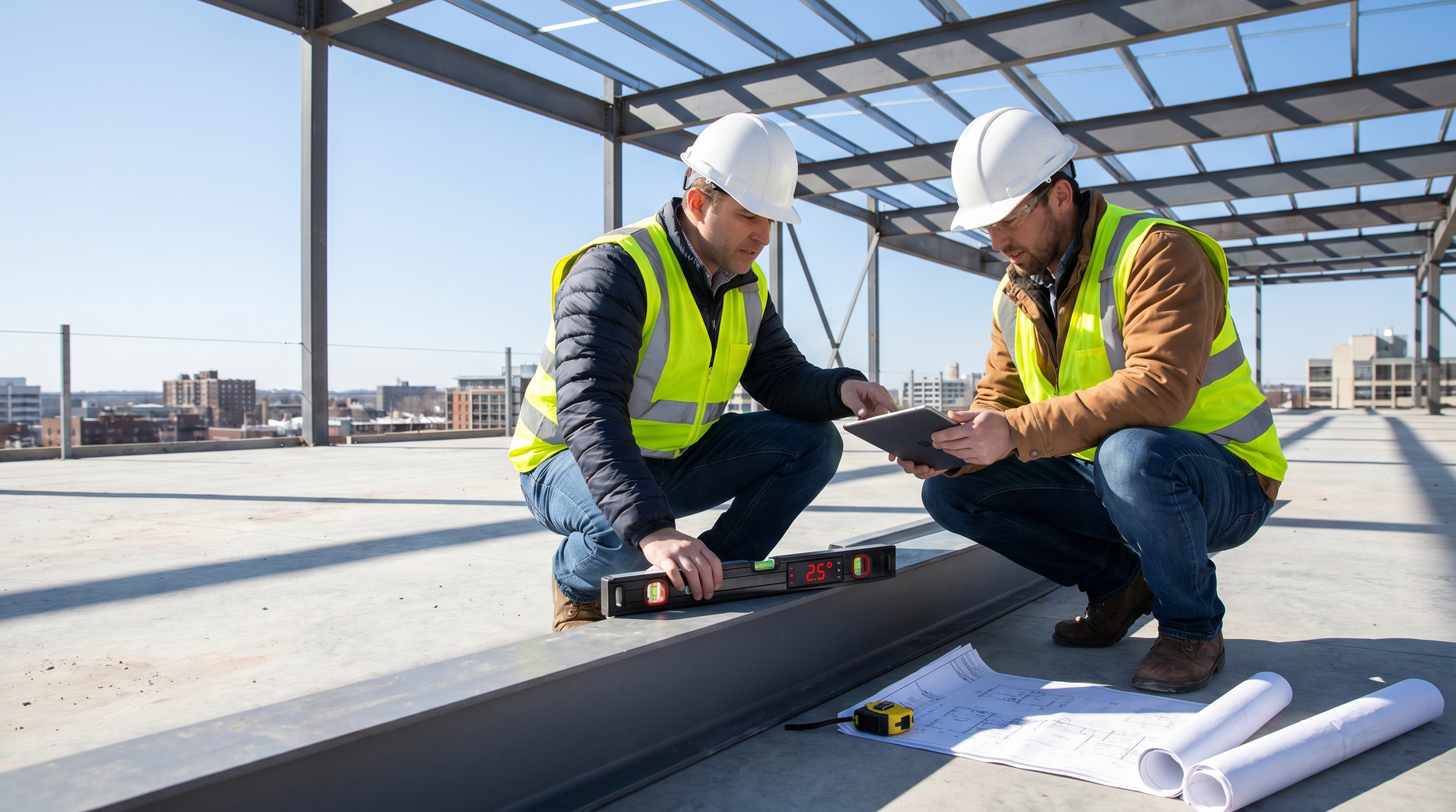
Accepting a polycarbonate skylight job without asking the right questions first is how contractors end up in impossible situations: wrong product, wrong structure, wrong drainage, wrong access, and a client who has very different expectations from what the site actually permits.
These are the 12 questions to answer before you commit.
1. What is the actual purlin span?
Not what's on the drawing — what's actually built. Go to site and measure before you price. Structural fabricators miss tolerances. Purlins get repositioned during construction. The purlin spacing on the as-built structure may be different from the design.
Your product selection and wall-thickness decision depend entirely on the actual span. If the spans are wider than the most common system allows, you need a higher-specification system — and if you've already priced for the cheaper product, you're absorbing the cost difference.
2. What is the roof slope?
Minimum acceptable slope for any polycarbonate standing seam system is 5°, with 7° being the practical preferred minimum for reliable drainage.
Below 5°: most systems should not be installed. Wind-driven rain will back up, end closures will flood, and the system will leak regardless of how carefully it's installed.
Between 5° and 7°: workable, but requires more careful attention to end closure details and gutter sizing.
Ask the client or structural engineer for the design slope. Then measure it on site. They are not always the same.
3. How does the drainage work?
A polycarbonate roof needs a clear, continuous drainage path. The water that runs off the panels must go somewhere — into a gutter, a parapet drainage point, or a free-overflow edge.
Questions to ask:
- Where does the stormwater go at the eave end?
- Is there a gutter? If so, who installs and maintains it?
- If the roof drains to a parapet, is the parapet outlet sized correctly for the rainfall catchment area?
- Are internal rainwater downpipes included in the scope or by others?
A skylight that drains into an inadequate gutter or blocked downpipe will appear to leak at the eave — but the problem is the drainage, not the skylight.
4. What is the structural support condition?
Ask about:
- Purlin material: MS, SS, or galvanised? (Matters for fastener specification — dissimilar metals can corrode)
- Purlin alignment: are they all in the same plane, or are there level differences between bays?
- End support: are the purlins fixed at both ends, or are any ends free-floating?
- Load capacity: has the structure been designed or checked for the polycarbonate system dead load plus wind load plus maintenance access load?
5. What is the wind zone and wind load requirement?
India's wind speed zones (IS 875 Part 3) vary from 33 m/s in low-exposure areas to 55 m/s in coastal high-exposure zones. The wind uplift requirement on the fixing system is directly derived from the wind speed and the building geometry.
If the project is in a coastal, high-altitude, or high-wind zone and the BOQ or specification hasn't addressed this explicitly, it needs to. A standard cleat system rated for 7 kN pull-out performs very differently from what's needed in a cyclone-prone coastal zone.
Ask the structural engineer for the design wind pressure on the roof. Match it to your system's rated performance.
6. What is the heat gain requirement?
For occupied buildings, heat gain through the skylight is often a concern — especially on east or west-facing slopes in Indian climates. The relevant specification questions are:
- Is a U-value specified for the skylight system?
- Is an infrared-reduction finish required on the panels?
- Has the HVAC engineer specified a maximum solar heat gain coefficient (SHGC) for the roof area?
If heat gain hasn't been addressed in the specification but the building has a mechanical cooling system, flag it before installation. A consultant who discovers the skylight is contributing to HVAC overload will look for the contractor to remediate.
7. What is the daylighting requirement?
Daylighting requirements are sometimes stated in lux (e.g. "minimum 400 lux at working plane") and sometimes in light transmission percentage. Ask:
- Has a daylight consultant been involved? If yes, what product did they design for?
- Is a specific light transmission percentage stated?
- Is diffused light required, or is direct transmission acceptable?
- Is glare control a requirement? (For offices, schools, and hospitals it almost always is)
If the spec requires 500 lux at the floor and you install a panel with 30% LT when 60% was needed, the lux target won't be met and you'll face a variation claim.
8. Who manages the waterproofing interface?
A skylight sits in a roof. The waterproofing of the roof around the skylight — the upstand, the curb, the interface between the polycarbonate system and the main roof membrane — is a critical junction.
In most projects, the main roof waterproofing is a different contractor from the skylight installer. The interface between the two scopes is the most common source of post-completion leaks — and both contractors point at each other.
Before you accept the job:
- Define in writing where your scope ends and the waterproofing contractor's scope begins
- If you're providing the curb/upstand, get the required height confirmed in writing
- If the main roof membrane is by others, confirm it will be in place and properly terminated before you install the skylight
9. What access is available for installation and maintenance?
A polycarbonate skylight on a 12-metre-high roof requires scaffold or MEWP for installation. After installation, it will need occasional inspection and cleaning. Ask:
- Is scaffolding available and when will it be struck?
- Is there permanent or temporary access for maintenance on this roof?
- Is there a requirement for walk-on glass or load-bearing panels within the skylight (for maintenance access)? If yes, this is a completely different product and structural specification from standard roofing panels
10. Is there a maintenance plan?
This question reveals the client's long-term expectations. A client who says "no maintenance is needed" has probably been told "polycarbonate is maintenance-free" by someone selling it wrong.
Polycarbonate roofing requires:
- Annual inspection of end closures, flashings, and gutters
- Periodic removal of leaf litter and debris from panel surfaces
- Inspection of protective films and any surface marks that indicate UV layer wear
- Gutter clearance before and after monsoon season
Confirm the maintenance expectations in writing as part of your contract. A client who does no maintenance and then complains about performance at year 8 is a foreseeable problem.
11. What is the fire safety requirement?
On commercial and institutional projects, fire performance of the roof elements is increasingly regulated. Check:
- Is a specific fire classification required? (B-S1-D0 to EN 13501-1 is a common specification requirement)
- Does the project require a fire-rated system?
- Is the polycarbonate roof over a sprinklered area or a fire-suppressed space?
Standard polycarbonate without fire modification is classified UL-94 V2 or similar. Fire-retardant grades exist and may be needed.
12. What are the programme constraints?
Finally — when does the client need this done? And what are the consequences of delay?
- Is the skylight on the critical path of the project programme?
- Are there programme penalties or liquidated damages if the skylight delays the floor below from being usable?
- What is the lead time for materials? (Custom panel lengths can take 2–4 weeks from order to site)
- Is there a season constraint — monsoon, extreme heat — that affects installation safely?
A job that seems routine in March becomes a crisis if the panels arrive during peak monsoon and the structure isn't ready to receive them.
Coxwell provides technical project review for skylight jobs. Bring us the drawings and structural information before you commit and we'll advise on product selection, system specification, and any site-specific risk factors.
Next step
Speak to a Coxwell engineer.
Our team can help you specify the right system, review your BOQ, or answer technical questions about your project.