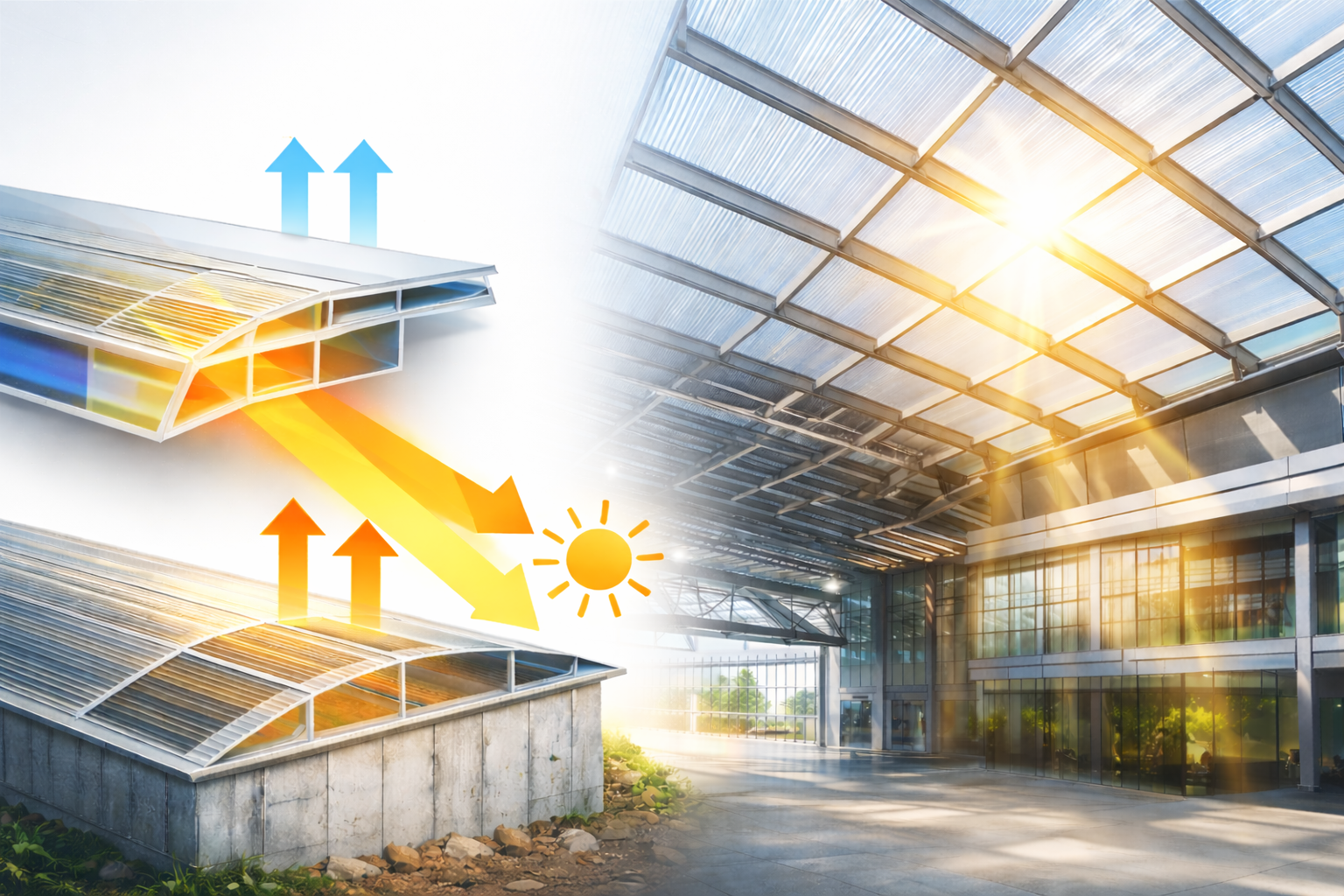
In modern construction, thermal performance is no longer optional — it’s mandatory. Whether you’re designing an industrial skylight, commercial facade, warehouse roofing, or railway canopy, understanding U-Value and SHGC is critical.
If you’re using polycarbonate sheets, this guide will help you understand:
What is U-Value?
What is SHGC?
How they impact heat, energy efficiency & comfort
Polycarbonate vs Glass comparison
Which thickness performs better
What to choose for Indian climate (especially hot regions)
Let’s simplify it.
What is U-Value in Polycarbonate Sheets?

U-Value (Thermal Transmittance) measures how much heat passes through a material.
Lower U-Value = Better insulation
Higher U-Value = More heat transfer
It is measured in:
W/m²K (Watts per square meter per Kelvin)
Why U-Value Matters in Roofing & Facades
In India, especially in hot climates like Delhi NCR, Rajasthan, Gujarat:
High U-Value → More heat enters building
AC load increases
Electricity bills rise
Indoor discomfort increases
That’s why architects search for:
“low U value roofing sheet”
“thermal insulation polycarbonate sheet”
“energy efficient skylight material”
Typical U-Values of Polycarbonate Sheets
| Thickness | Type | Approx U-Value |
|---|---|---|
| 6mm Solid | Solid | 5.5 – 5.8 W/m²K |
| 10mm Multiwall | Multiwall | 2.8 – 3.0 W/m²K |
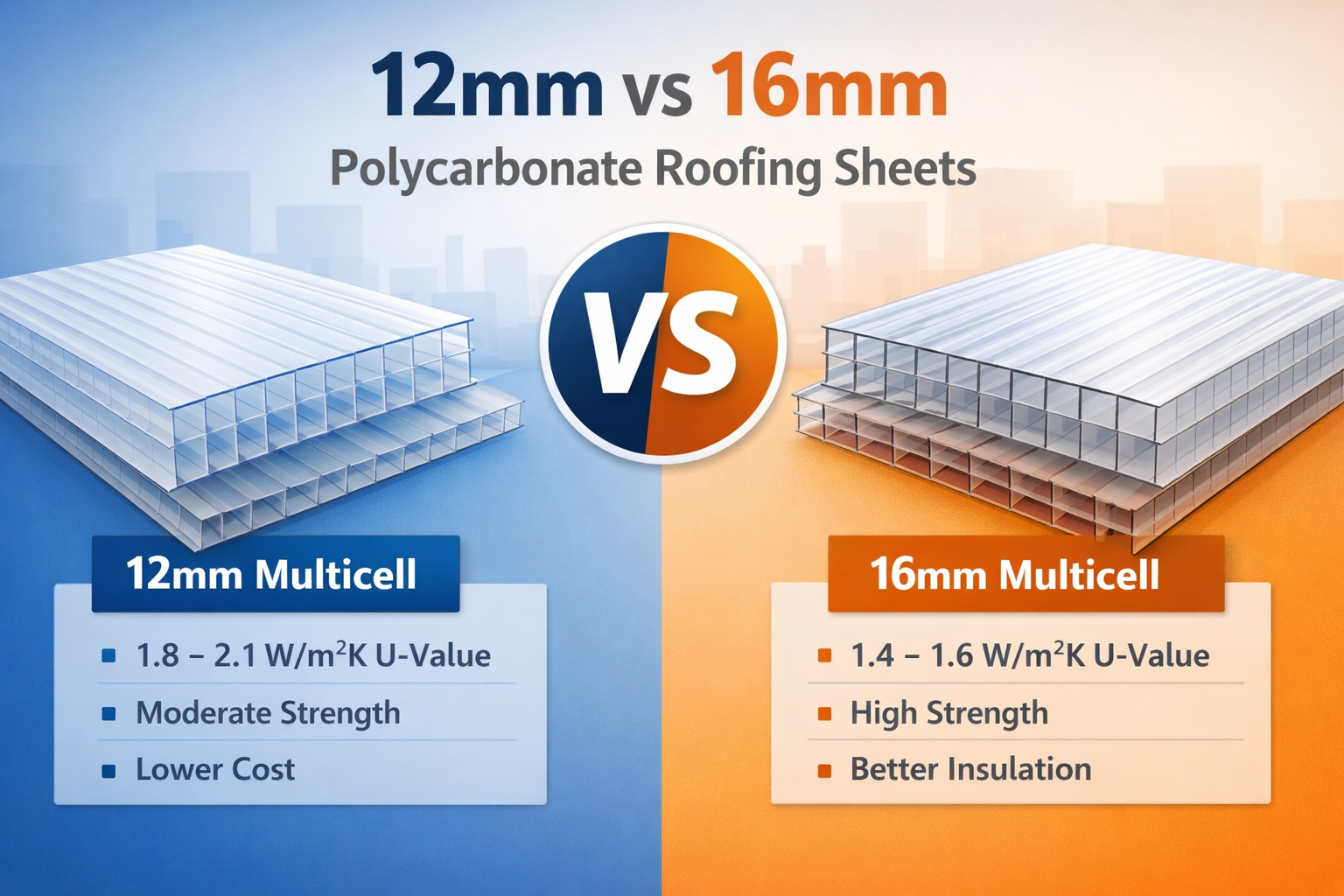
| 16mm Multicell | Multicell | 2.1 – 2.5 W/m²K |
| 25mm Multicell | Multicell | 1.5 – 1.8 W/m²K |
More chambers = Better insulation
Thicker sheet = Lower U-Value
What is SHGC in Polycarbonate Sheets?

SHGC (Solar Heat Gain Coefficient) measures how much solar radiation passes through the material.
It is expressed as a value between 0 and 1.
Lower SHGC = Less solar heat enters
Higher SHGC = More heat enters
Why SHGC is Important?
In tropical countries like India:
High SHGC → More solar heat → Hot interiors
Low SHGC → Reduced heat gain → Energy savings
Typical SHGC Values
| Sheet Type | SHGC Range |
|---|---|
| Clear Solid PC | 0.80 – 0.90 |
| Opal / Diffused PC | 0.40 – 0.60 |
| IR Cut Polycarbonate | 0.25 – 0.45 |
IR coated or opal sheets reduce solar heat significantly
Ideal for industrial roofing & factories
Polycarbonate vs Glass (Thermal Comparison)
| Property | Polycarbonate (16mm Multicell) | 6mm Glass |
|---|---|---|
| U-Value | ~2.2 W/m²K | ~5.8 W/m²K |
| SHGC | 0.40 – 0.60 | 0.75 – 0.85 |
| Impact Resistance | 200x Stronger | Fragile |
| Weight | Lightweight | Heavy |
Polycarbonate provides better insulation
- Lower AC load
- Higher impact resistance
- Better daylight diffusion
Where Low U-Value & SHGC Matter Most
Industrial skylights
Warehouse roofing
Railway platforms
Airport canopies
Shopping malls
Car parking sheds
Hospital corridors
Educational institutions
If your project is targeting:
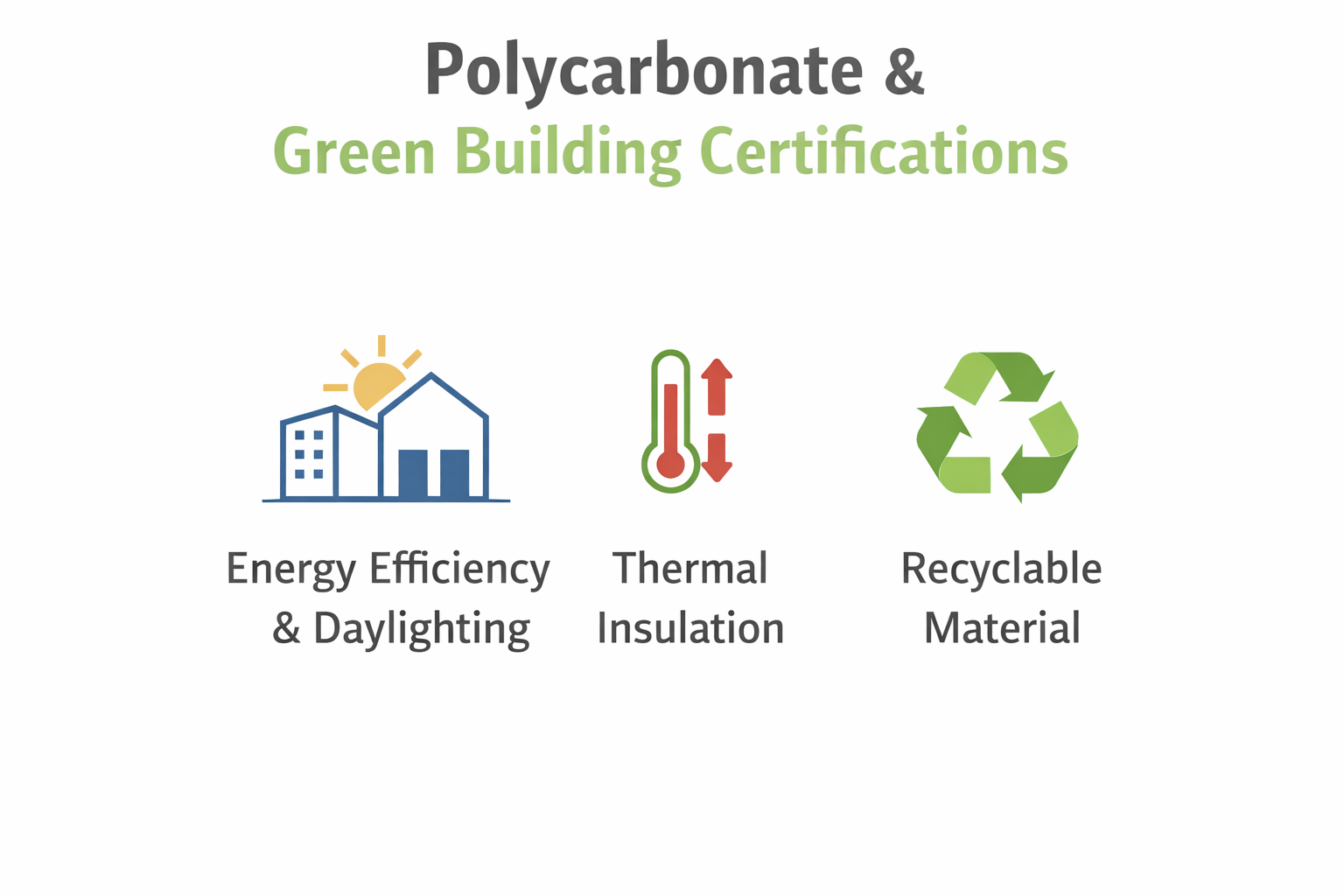
LEED Certification
ECBC Compliance
Energy Efficient Building Design
Then U-Value & SHGC are mandatory considerations.
Which Polycarbonate Thickness Should You Choose?
For Car Parking
10mm or 16mm Multicell
For Industrial Roofing
16mm or 25mm Multicell
For Skylight with Daylight Diffusion
Opal 16mm Multicell
Why Choose Coxwell Polycarbonate Sheets?
When it comes to performance, not all sheets are equal.
Coxwell Polycarbonate Sheets offer:
- Optimized low U-Value Multicell sheets
- Advanced IR Cut technology for lower SHGC
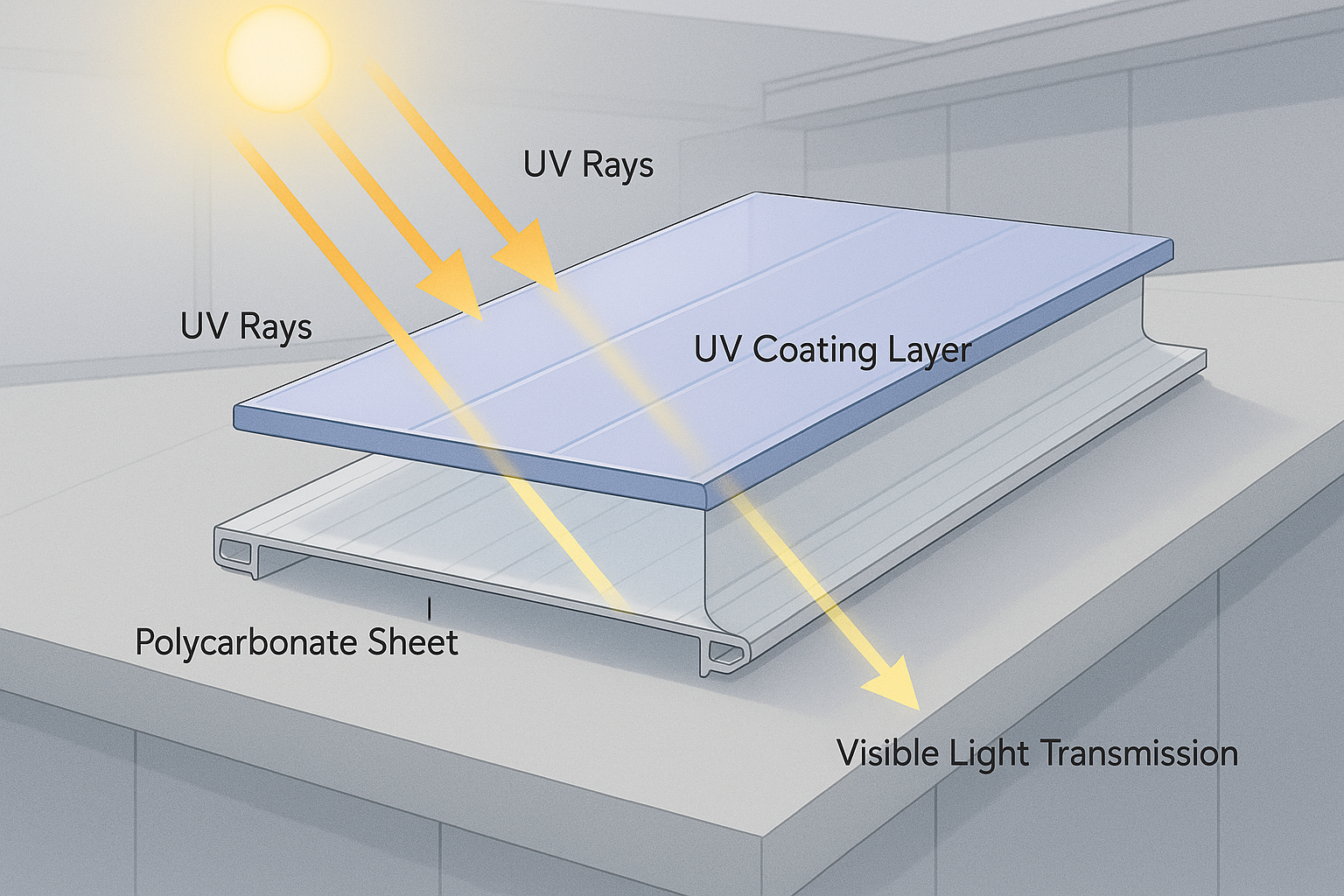
- UV protected sheets (co-extruded layer)
- High impact resistance
- Long service life
- Suitable for industrial & government projects
Get Technical Specifications Today
If you’re:
An architect designing skylights
A contractor working on industrial roofing
A consultant evaluating thermal performance
A government project authority
Contact Coxwell today to get:
Complete Technical Data Sheet (TDS)
U-Value & SHGC certified reports
Thickness recommendation for your project